Car interior cleaning technology continues to evolve, with developments in materials, equipment, and approaches that may change how vehicle owners maintain their interiors. While the fundamental challenge of removing debris from vehicle interiors remains constant, the methods and tools available for addressing this challenge continue to develop. Understanding emerging trends helps anticipate how car cleaning may change while maintaining perspective on what genuinely improves cleaning versus what amounts to marketing novelty.

The future of car interior cleaning will likely be shaped by vehicle design changes, material innovations, and cleaning technology advances. Electric vehicles already feature different interior layouts that affect cleaning approaches. New materials may require different care methods. Cleaning equipment continues to improve in capability and convenience. However, practical cleaning improvement matters more than technological novelty for its own sake.
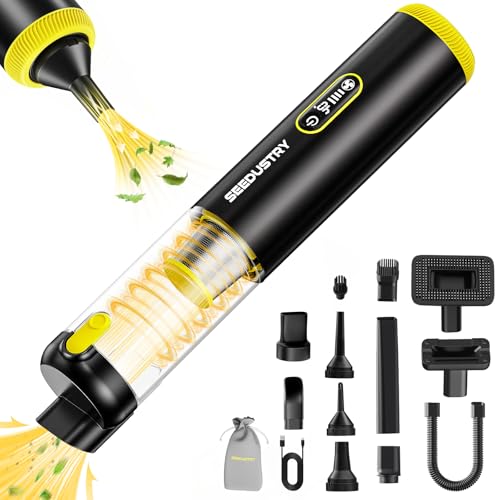
This guide examines emerging trends in car interior cleaning, considering what developments may meaningfully impact how vehicle owners maintain their interiors.
Key Takeaways
- Vehicle design changes affect cleaning requirements: New layouts and materials need adapted approaches
- Battery technology improvements benefit cordless vacuums: Better power and runtime continue developing
- Material innovations may simplify cleaning: Stain-resistant and antimicrobial surfaces reducing maintenance
- Core cleaning fundamentals remain unchanged: Debris removal remains the essential task
- Evaluate innovations based on practical benefit: Not all technology improves actual cleaning
Table of Contents
- Vehicle Interior Evolution
- Material Innovation
- Vacuum Technology Advancement
- Smart and Connected Features
- Autonomous Cleaning Potential
- Professional Service Evolution
- Environmental Considerations
- Health and Hygiene Focus
- What Will Remain Constant
- Practical Perspective
- Related Articles
- Frequently Asked Questions
Vehicle Interior Evolution
How car design changes affect cleaning needs.
Electric vehicle layouts feature flat floors and different space utilization. Cleaning approaches adapt to new configurations.
Minimalist interior designs reduce complex surfaces requiring detailed cleaning. Simpler surfaces may clean more easily.
Increased screen and technology surfaces need appropriate cleaning approaches. Electronics require specific care.
Sustainable and recycled materials may have different care requirements. New materials need new cleaning understanding.
Interior design evolution will continue driving cleaning adaptation.
Material Innovation
New surfaces affecting cleaning requirements.
Stain-resistant fabric treatments reduce permanent staining from spills. Easier maintenance through material properties.
Antimicrobial surfaces reduce bacterial growth between cleanings. Hygiene maintained with less intervention.
Easy-clean surfaces repel debris and contamination. Material properties doing some cleaning work.
Sustainable materials may require specific care to maintain properties. Eco-friendly materials with eco-friendly care.
Material innovation may reduce cleaning burden through design rather than cleaning effort.
Vacuum Technology Advancement
How cleaning equipment continues improving.
Battery technology improvements provide more power and longer runtime. Cordless capability approaching corded performance.
Motor efficiency gains extract more suction from available power. Better cleaning without larger motors.
Filtration improvements capture finer particles. Better air quality from improved filter technology.
Lighter materials reduce vacuum weight without sacrificing capability. Easier handling with maintained performance.
Incremental improvements accumulate into significantly better equipment over time.
Smart and Connected Features
Technology integration in cleaning equipment.
Usage tracking and maintenance reminders may help owners maintain equipment properly. Data-driven maintenance scheduling.
Performance monitoring can identify problems before they cause failures. Predictive maintenance through sensors.
App integration provides information and control options. Convenience features for connected users.
Practical value of smart features depends on whether users engage with them. Technology unused provides no benefit.
Smart features should serve cleaning improvement rather than adding complexity.
Autonomous Cleaning Potential
Robot vacuum concepts for vehicle interiors.
Autonomous vacuums work well in homes with consistent floor layouts. Vehicle interiors present different challenges.
Complex vehicle geometry makes autonomous navigation difficult. Seats, consoles, and irregular spaces challenge robots.
Current robot technology not well-suited to vehicle interior cleaning. Stationary floors differ from vehicle environments.
Future developments may address these challenges. Autonomous car cleaning remains technically difficult.
Human operation likely remains most effective approach for foreseeable future.
Professional Service Evolution
How detailing services may change.
Mobile detailing services bring cleaning to vehicle location. Convenience driving service model evolution.
Specialized cleaning for specific vehicle types and materials. Expertise for particular cleaning challenges.
Technology-enhanced services using advanced equipment. Professional capability exceeding consumer equipment.
Subscription and maintenance program models. Regular service through ongoing relationships.
Professional services adapt to vehicle and owner needs.
Environmental Considerations
Sustainability in car interior cleaning.
Water-efficient and waterless cleaning methods reduce environmental impact. Less water consumption for vehicle cleaning.
Eco-friendly cleaning products becoming more available. Effective cleaning with reduced environmental footprint.
Durable equipment reducing replacement frequency. Quality lasting longer than disposable alternatives.
Recyclable and sustainable cleaning supplies. End-of-life consideration for cleaning products.
Environmental awareness influencing cleaning product and method choices.
Health and Hygiene Focus
Increased attention to interior cleanliness.
Post-pandemic awareness of vehicle interior hygiene increased. Cleanliness valued beyond appearance.
Sanitization as part of cleaning routine. Disinfection alongside debris removal.
Air quality in vehicles receiving more attention. Filtration and cleaning affecting cabin air.
Health-focused cleaning products and methods. Hygiene-driven cleaning beyond visual cleanliness.
Health considerations adding dimension to interior maintenance.
What Will Remain Constant
Fundamentals unlikely to change.
Debris will continue accumulating in vehicles. Basic cleaning need is permanent.
Suction remains the primary method for debris removal. Core vacuum function unchanged.
Regular maintenance will always be necessary. No technology eliminates cleaning need entirely.
Human judgment guides cleaning priorities. Automation cannot replace owner assessment.
Fundamentals persist despite technological change.
Practical Perspective
Evaluating future developments realistically.
Genuine improvements deserve adoption when available. Better tools produce better results.
Marketing hype should not drive purchase decisions. Evaluate based on practical benefit.
Current technology is already quite capable. Waiting for future perfection means not cleaning well now.
Balance between current capability and future potential. Use what works now while remaining open to improvement.
Pragmatic approach serves better than either resistance or uncritical adoption.
Related Articles
Explore more car vacuum guides and reviews:
- Car Vacuum Cleaner Attachments Guide
- Best Cordless Car Vacuums Under $100
- Corded vs Cordless Car Vacuums: Which Type is Right for You?
- How to Vacuum Car Seats Properly
Frequently Asked Questions
Will robot vacuums work for car interiors?
Current robot technology is not well-suited to vehicle interior cleaning. Complex geometry, irregular surfaces, and confined spaces present challenges robots handle poorly. Human operation remains more effective for foreseeable future.
How will electric vehicles change interior cleaning?
EV interiors often feature flat floors, minimalist design, and different materials. Cleaning approaches adapt to new layouts. Core cleaning remains similar; specific techniques adjust for EV-specific features.
Will new materials make cleaning easier?
Some material innovations reduce cleaning burden through stain resistance, antimicrobial properties, and easy-clean surfaces. Material design may do some work that cleaning currently requires. However, cleaning will remain necessary.
Should I wait for better vacuum technology?
Current vacuum technology is mature and effective. Incremental improvements are ongoing, but revolutionary changes are unlikely. Buy appropriate capability now; future equipment will also improve incrementally.
Are smart vacuums worth it?
Smart features provide value only if you engage with them. Usage tracking and maintenance reminders help some users. Others find connectivity features unnecessary complexity. Evaluate whether you would actually use smart features.
Will self-cleaning car interiors exist?
Self-cleaning surfaces can reduce maintenance but not eliminate it. Materials that repel debris still need periodic cleaning. Complete self-cleaning interiors remain unlikely given the variety of contamination vehicles encounter.
How is professional detailing changing?
Mobile services, specialized expertise, subscription models, and advanced equipment characterize evolving professional services. Convenience and specialization driving service development.
What about environmental concerns in car cleaning?
Water-efficient methods, eco-friendly products, and durable equipment address environmental concerns. Sustainability considerations increasingly influencing cleaning product and method choices.
Will cleaning become more health-focused?
Increased awareness of hygiene is adding sanitization and air quality focus to interior cleaning. Health considerations expanding beyond appearance to include cleanliness for wellbeing.
What cleaning fundamentals won't change?
Debris accumulation, need for regular maintenance, suction as primary removal method, and human judgment in cleaning priorities will remain constant regardless of technological advancement.


