Car vacuums differ fundamentally from household vacuums because the cleaning challenges they address differ fundamentally. Vehicle interiors present unique constraints and requirements that household vacuum designs don't anticipate. The compact spaces, varied surfaces, debris types, and power source limitations of automotive cleaning demand purpose-built equipment that household designs cannot adequately address. Understanding why car vacuums are designed differently helps set appropriate expectations and guides selection of equipment suited to automotive cleaning tasks.

Household vacuums optimize for large floor areas, continuous operation from wall outlets, and debris types common in homes. Car vacuums must reach into tight spaces, operate from limited power sources, and handle the specific contamination that accumulates in vehicles. These different priorities drive different design decisions throughout the equipment, from motor selection to attachment design to form factor choices. A vacuum excellent for household use may prove frustrating in automotive applications, and vice versa.
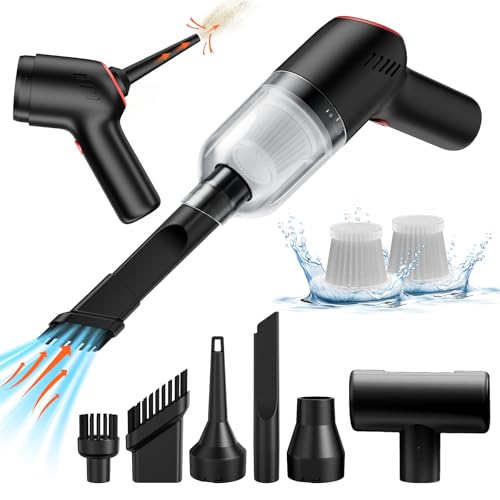
This guide explores the design differences between car and household vacuums, explaining why these differences exist and how they affect equipment selection and usage for car cleaning applications.
Key Takeaways
- Space constraints drive compact car vacuum design: Reaching into tight areas requires smaller form factors
- Power source limitations affect motor design: 12V or battery power differs from unlimited wall current
- Debris types differ between home and car: Sand, gravel, and outdoor debris challenge car vacuums differently
- Attachment needs differ significantly: Crevice tools matter more for cars than homes
- Portability requirements differ: Car vacuums often need easy transport and storage
Table of Contents
Space and Access Constraints
Vehicle interiors present access challenges that household environments rarely do.
Tight spaces between seats, under seats, and around console components require vacuum designs that can maneuver where larger household units cannot reach.
Crevices in automotive seating contain concentrated debris that wide household vacuum heads cannot address. Narrow attachments are essential rather than occasional in car cleaning.
Seat adjustment limits require reaching into spaces without repositioning seats. Vacuum and attachment reach must accommodate fixed furniture positioning.
Headliner and upper interior surfaces need lightweight attachments that can work overhead without strain. Household vacuums designed for floor work don't address this need.
Doors and openings limit vacuum positioning. Car vacuum design must account for operating from vehicle doorways rather than walking freely around cleaning areas.
Power Source Differences
The electricity available for car vacuums differs fundamentally from household power.
12V vehicle outlets provide limited current compared to household 120V outlets. Motors must work within these current constraints while providing useful suction.
Battery-powered car vacuums face runtime limitations that corded household vacuums don't. Design must balance motor power against battery capacity and weight.
Voltage differences affect motor selection and design. Motors optimized for 12V or battery operation differ from those designed for household current.
Shop vacuums using household current can provide more power but require extension cords and outlet access near vehicles. Convenience trades off against power availability.
Energy efficiency matters more for limited power sources. Car vacuum designs optimize power use in ways unnecessary for household vacuums with unlimited current access.
Debris Type Considerations
Vehicles accumulate different debris than homes, requiring different handling characteristics.
Sand and gravel from outdoor activities challenge car vacuums differently than household dust. Dense, abrasive particles require different filtration and collection approaches.
Food debris from eating in vehicles creates sticky contamination homes rarely see in living areas. Car vacuum designs must handle residue that household vacuums encounter less frequently.
Tracked-in dirt concentrates at foot areas unlike household dirt distribution. Car vacuum designs must effectively clean specific contamination zones.
Pet hair in vehicles accumulates on specific surfaces that differ from household pet hair distribution. Attachment designs for automotive pet hair cleaning address different geometries.
Moisture from rain, snow, and spills is more common in vehicles than in typical household cleaning scenarios. Some car vacuums incorporate wet capability that household vacuums rarely need.
Attachment Design Priorities
The attachments that matter most differ between car and household cleaning.
Crevice tools are essential for car cleaning, addressing seams, gaps, and tight spaces throughout vehicle interiors. Household cleaning uses crevice tools occasionally; car cleaning uses them constantly.
Brush attachments for car cleaning address specific automotive surfaces. Upholstery brushes, dashboard brushes, and carpet brushes differ from household equivalents in size and configuration.
Short, maneuverable hoses suit car cleaning better than long household hoses. Reach requirements differ; excess length becomes obstruction in tight spaces.
Flexible attachments that bend into corners matter more for car cleaning than straight, rigid household attachments.
Small form factor attachments that fit between seats and around obstacles replace the wide floor heads that household vacuums prioritize.
Form Factor and Portability
How vacuums are shaped and transported differs based on intended use.
Handheld car vacuums enable single-hand operation while other hand manipulates seats or holds doors. Household vacuums assume two-hand operation with rolling bodies.
Compact storage suits car vacuums that may live in vehicles. Household vacuums assume closet storage with space for larger bodies.
Lightweight construction matters for handheld car vacuums used for extended periods. Household vacuums push most weight on wheels; car vacuums often must be held.
Cable and cord management differs. Car vacuums need manageable cord lengths for operation from outlets; coiled cords or retraction systems suit limited spaces.
Self-contained operation without requiring external components suits car cleaning where accessories may not be conveniently stored with the vacuum.
Motor and Suction Design
Motor design priorities differ between car and household vacuum applications.
Car vacuum motors optimize for efficiency within power constraints. Maximum suction per watt matters more than absolute suction levels.
Household vacuum motors can use more power for more suction without efficiency optimization. Wall current removes power constraints that car vacuums face.
Motor size constraints affect car vacuum design. Compact motors fit handheld form factors; household vacuums accommodate larger motors in rolling bodies.
Duty cycle expectations differ. Car cleaning sessions are typically shorter than whole-house cleaning; motor designs reflect different operational duration requirements.
Noise characteristics may be less constrained for car vacuums used outdoors or in garages compared to household vacuums operating in living spaces.
Filtration Considerations
Filtration needs differ between car and household vacuum applications.
Automotive debris includes more dense, abrasive particles than typical household dust. Filters must handle sand and gravel that household vacuums rarely encounter.
Compact filtration must fit small form factors while providing adequate particle capture. Space constraints limit filtration options compared to larger household vacuums.
Outdoor use for car cleaning makes exhaust air quality less critical than indoor household use. Filtration priority may differ accordingly.
Wet capability in some car vacuums requires different filtration approaches than dry-only household vacuums.
Filter cleaning and replacement convenience matters for car vacuums that may be stored in vehicles away from replacement supplies.
When to Use Which Type
Understanding design differences guides appropriate equipment selection.
Use purpose-designed car vacuums for interior detailing requiring access to tight spaces with appropriate attachments. The design matches the task.
Use household vacuums or shop vacuums for floor mats removed from vehicles. Open cleaning of removed items doesn't require car-specific design.
Use shop vacuums for heavy debris removal where their superior suction outweighs the convenience advantages of car-specific designs.
Consider multiple tools for different aspects of car cleaning. No single vacuum type optimally addresses all automotive cleaning scenarios.
Match equipment to your specific needs. Someone who rarely cleans cars may use household equipment adequately; regular cleaners benefit from purpose-designed equipment.
Related Articles
Explore more car vacuum guides and reviews:
- Car Vacuum Cleaner Attachments Guide
- Best Cordless Car Vacuums Under $100
- Corded vs Cordless Car Vacuums: Which Type is Right for You?
- How to Vacuum Car Seats Properly
Frequently Asked Questions
Can I use my household vacuum to clean my car?
You can, but household vacuums aren't optimized for automotive cleaning. They may lack appropriate attachments, may not reach tight spaces, and may be awkward to maneuver in vehicle interiors. Purpose-designed car vacuums or shop vacuums typically work better.
Why are car vacuums less powerful than household vacuums?
Power source limitations constrain car vacuum motor power. 12V outlets and batteries provide less energy than household current. Car vacuum designs optimize suction within these constraints rather than competing with unlimited-power household designs.
Are shop vacuums better than car vacuums for cleaning cars?
Shop vacuums provide stronger suction but may lack attachments optimized for automotive interiors. They work well for heavy debris and floor mats but may be awkward for detailed interior cleaning. Many car owners use both types for different aspects of cleaning.
Why are car vacuum attachments so different from household attachments?
Car cleaning involves tight spaces, narrow crevices, and specific surfaces that household attachments don't address well. Narrow crevice tools, flexible hoses, and compact brush heads suit automotive cleaning geometry better than wide household floor heads.
Should I buy a separate vacuum just for car cleaning?
If you clean your car regularly and want thorough results, dedicated equipment provides better outcomes than repurposing household equipment. Occasional cleaners may manage with household or shop vacuum accessories.
Why don't car vacuums have beater bars like carpet vacuums?
Automotive carpet is typically lower pile than household carpet and doesn't require beater bar agitation. Additionally, power and space constraints make beater bars impractical in compact car vacuum designs.
Can I use a car vacuum for household cleaning?
Car vacuums can handle small household tasks but aren't efficient for whole-room cleaning. Their limited capacity, runtime, and attachment selection suit spot cleaning better than comprehensive household use.
Why are some car vacuums designed for wet pickup?
Vehicles experience more liquid contamination than typical household environments. Rain, snow, spills, and tracked-in moisture are common. Wet capability addresses these automotive-specific cleaning needs.
Do I need a corded or cordless car vacuum?
Both have advantages. Cordless provides convenience and flexibility; corded provides consistent power without runtime limitations. Your cleaning location, outlet access, and preferred operating style guide the better choice for your situation.
Why are car vacuums often handheld while household vacuums roll?
Vehicle interiors require maneuvering into positions where rolling vacuums cannot go. Handheld operation enables reaching between seats, under dashboards, and into areas where a rolling body would obstruct access.


