12V car vacuums that plug directly into your vehicle's accessory outlet offer a compelling practical advantage that cordless vacuums cannot match: they never run out of battery mid-cleaning. While cordless vacuums have dominated the car vacuum market in recent years with their convenience and improving performance, 12V corded models remain genuinely practical choices for car owners who want always-ready cleaning capability without worrying about battery management, charging routines, or the frustration of discovering a dead battery precisely when cleaning is needed.

These vacuums draw power directly from your vehicle's electrical system, providing consistent suction for as long as you need to clean without the runtime limitations that constrain even the best cordless options. For users who keep a vacuum permanently in their vehicle for whenever opportunity arises, who want the reliability of equipment that works every time without preparation, or who simply prefer eliminating battery concerns from their car cleaning routine, 12V vacuums deserve serious consideration despite the cord management they require.

This guide examines the best 12V car vacuums currently available, covering the practical considerations that affect real-world satisfaction, the trade-offs these vacuums involve compared to cordless alternatives, and how to select the right option for your specific needs and priorities.
Key Takeaways
- Unlimited runtime: Clean as long as your vehicle runs without battery depletion concerns
- Always ready: No battery management means the vacuum works whenever you need it
- Cord length matters: 15+ foot cords provide adequate reach for most vehicle interiors
- Power has limits: 12V systems cannot match household outlet or premium cordless power
- Best for maintenance: Excellent for regular upkeep; may not suffice for intensive deep cleaning
Table of Contents
Understanding How 12V Car Vacuums Work
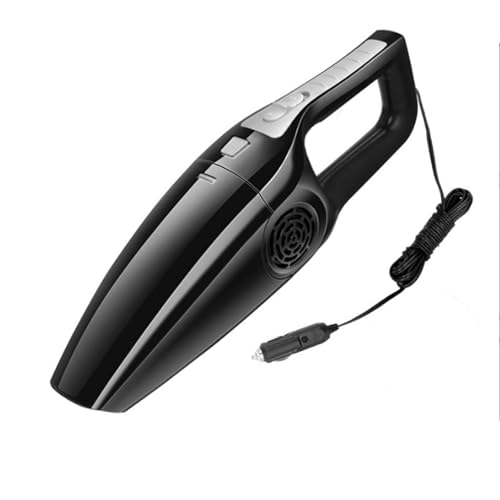
12V car vacuums connect to the same accessory outlet (formerly called the cigarette lighter socket) that you might use for phone chargers or other vehicle accessories. This outlet provides 12-volt direct current power from your vehicle's electrical system, enabling the vacuum to operate without batteries as long as the power connection remains established.
The power available through this outlet is inherently limited compared to household electrical outlets or high-capacity lithium-ion batteries. Most vehicle accessory outlets are protected by fuses rated between 10 and 15 amps, which caps the power any connected device can draw. This limitation affects vacuum motor size and suction capability—12V vacuums cannot match the raw power that household-current vacuums or premium cordless models with large batteries provide.
This power limitation doesn't mean 12V vacuums are ineffective—it means understanding their appropriate role helps set realistic expectations. These vacuums excel at maintenance cleaning, handling regular dust and debris accumulation effectively. They work well for quick cleanups and keeping reasonably maintained vehicles in good condition. Where they may struggle involves heavy contamination, deeply embedded debris, or demanding cleaning situations where maximum suction provides meaningful advantage.
Drawing power from your vehicle's electrical system while the engine isn't running depletes the battery that starts your engine. Extended vacuuming with the engine off risks leaving insufficient charge for starting. The practical solution involves running the engine during cleaning sessions of more than 10-15 minutes, allowing the alternator to replenish power as the vacuum draws it. Brief cleaning sessions typically don't create starting problems, but erring toward engine-running operation provides safety margin.
The Unlimited Runtime Advantage
The most compelling reason to choose a 12V vacuum over cordless alternatives is the complete elimination of runtime limitations. Understanding what this advantage means in practical terms helps evaluate whether it addresses your actual needs.
Cordless vacuums, regardless of quality level, eventually deplete their batteries during use. Budget cordless options may provide only 10-15 minutes; even premium models top out at 40-60 minutes. For large vehicles, thorough cleaning sessions, or multiple vehicles cleaned sequentially, these runtime limits create real constraints that 12V vacuums completely avoid.
The "always ready" aspect of 12V vacuums provides value beyond runtime itself. Cordless vacuums work only if someone remembers to charge them, and battery charge depletes over time even when sitting unused. A 12V vacuum stored in your vehicle works every time you need it, regardless of how long since last use. This reliability matters for users who want cleaning capability available without planning or preparation.
For users who keep a vacuum permanently in their vehicle—ready for immediate response to spills, messes, or opportunistic cleaning while waiting—12V vacuums make more practical sense than cordless options that might sit with depleted batteries when needed. The convenience of always-available equipment has genuine value that runtime specifications alone don't capture.
The trade-off for unlimited runtime involves cord management during cleaning. The cord that provides continuous power also requires routing around seats, through doors, and around the vehicle as you clean different areas. Users comfortable with cord management find this trade-off acceptable; users who find cords frustrating may prefer accepting runtime limitations for cordless freedom.
Why Cord Length Matters Significantly
For 12V vacuums, cord length directly determines how much of your vehicle's interior you can reach from the power connection point. Unlike household cleaning where you can reposition the plug to access different rooms, the 12V outlet location is fixed, making cord length a critical specification.
Most vehicles have accessory outlets located in the front dashboard area, center console, or front armrest storage. Reaching rear seats, cargo areas, and the far corners of larger vehicles requires cord length that extends from this front-mounted connection point to all intended cleaning areas. Short cords that don't reach everywhere create frustrating limitations or require awkward repositioning attempts.
For compact and mid-size sedans, 12-15 foot cords typically provide adequate reach throughout the interior. Larger SUVs, trucks with extended cabs, and minivans may require 16-18+ feet to reach cargo areas and third rows comfortably. Full-size SUVs and vans may benefit from even longer cords that provide margin rather than just-adequate reach.
When evaluating 12V vacuum options, identify your vehicle's outlet location and estimate the distance to the furthest area you'll want to clean. Choose cord length that exceeds this distance by comfortable margin rather than matching it exactly—a few extra feet provides flexibility that precisely adequate length doesn't.
Some 12V vacuums feature coiled cords that extend when needed and retract for storage. While this design helps with cord management, ensure the extended length meets your reach requirements—coiled cords may advertise total extended length that includes stretching beyond comfortable use.
Top 12V Car Vacuum Recommendations
Several 12V vacuums have established themselves as reliable performers with track records of user satisfaction. These recommendations represent proven options across different priorities and price points.
The ThisWorx Car Vacuum has dominated the budget 12V segment with extensive positive reviews and consistent performance reports. Its 106W motor provides adequate suction for maintenance cleaning, and the 16-foot cord reaches most vehicle areas from front outlet positions. The included attachments address various cleaning situations, and the built-in LED light illuminates dark areas during cleaning. Priced typically around $30-35, the ThisWorx represents strong value for users who want reliable basic capability without premium investment.
HOTOR Car Vacuum competes directly with ThisWorx at similar pricing, offering comparable capability with slightly different feature emphasis. User reviews suggest performance roughly equivalent to ThisWorx, with some users preferring HOTOR's ergonomics or attachment selection. At $25-30 typically, HOTOR provides entry-level option for budget-conscious buyers. Both ThisWorx and HOTOR represent proven budget choices; selection between them often comes down to availability and minor preference rather than significant capability difference.
BLACK+DECKER brings established brand heritage to the 12V segment with options that typically exceed budget alternatives in build quality and motor capability. Higher prices around $50-80 buy more powerful suction and often better durability, though the fundamental power limitations of 12V systems still apply. Users who want to step up from pure budget options while remaining in the 12V format find BLACK+DECKER provides meaningful quality improvement.
Armor All offers wet/dry capability in the 12V format, enabling handling of small liquid spills that dry-only vacuums cannot address. The trade-off typically involves shorter cord length than dry-only alternatives. For users who want wet capability without investing in separate equipment, Armor All's wet/dry options provide this versatility within the 12V category.
Maintenance and Long-Term Reliability
12V vacuums benefit from the same maintenance attention that extends any vacuum's useful life. Understanding specific maintenance considerations for this vacuum type helps maximize service life from your investment.
Regular filter cleaning maintains suction performance and prevents motor strain from airflow restriction. Most 12V vacuums use washable filters that require periodic cleaning as debris accumulates. Cleaning frequency depends on usage intensity—heavy use warrants more frequent filter attention. Allowing filters to dry completely before reinstallation prevents mold growth and moisture damage to other components.
Emptying the dust container before it becomes overfull maintains suction and prevents debris from backing up into areas where it shouldn't be. The smaller containers common in compact 12V vacuums fill faster than larger shop vacuum designs, requiring more frequent emptying during thorough cleaning sessions.
Cord condition affects both safety and functionality. Inspect cords periodically for damage, particularly where they exit the vacuum body and at the plug. Damaged insulation creates electrical hazard; damaged conductors can cause power delivery problems. Careful cord handling during use and storage—avoiding kinks, sharp bends, and door closures that pinch wires—extends cord life.
The 12V plug connection deserves attention. Corrosion or debris on plug contacts reduces power delivery and may cause connection problems. Keeping both the plug and your vehicle's outlet clean ensures reliable power connection. If your vacuum stops working suddenly, check the outlet fuse before assuming vacuum failure—blown fuses from power overloads are common and inexpensive to replace.
Storage location affects long-term vacuum condition. Extreme temperature exposure—both hot and cold—can stress components over time. While occasional exposure won't cause immediate damage, years of storage in a hot vehicle or freezing garage may accelerate wear compared to climate-controlled storage.
Comparing 12V to Cordless Alternatives
Understanding how 12V vacuums compare to cordless alternatives helps determine which approach better suits your specific situation and priorities.
12V advantages include unlimited runtime, always-ready availability without charging, lower purchase price at comparable capability levels, no battery degradation over years of ownership, and simple operation without power mode selections or battery management.
Cordless advantages include freedom from cord management during cleaning, portability that doesn't require vehicle proximity, potentially stronger suction from premium models with large batteries, use for non-vehicle cleaning where no 12V outlet exists, and generally more compact storage.
The right choice depends on what you value more. Users who prioritize reliability, always-ready availability, and unlimited runtime for large vehicles often prefer 12V. Users who prioritize convenience, maximum suction power, and multi-use capability often prefer cordless. Neither choice is universally superior—matching format to priorities produces satisfaction.
Some users find value in owning both formats: a 12V vacuum permanently stored in the vehicle for opportunistic and emergency cleaning, plus a cordless vacuum for home-based thorough cleaning sessions where its advantages apply. This dual approach eliminates the need to choose but requires accepting the cost of two vacuums.
Using 12V Vacuums Effectively
Getting the best results from 12V vacuums involves techniques and practices that work with their characteristics rather than fighting their limitations.
Plan cord routing before beginning to clean. Identify how the cord will reach each area you want to clean, routing it in ways that avoid tangling or catching on seat adjustment mechanisms and door components. Thoughtful cord management before cleaning makes the actual cleaning process smoother.
Run your vehicle's engine during extended cleaning sessions. While brief cleaning may not deplete battery enough to create problems, running the engine eliminates concern entirely and ensures consistent power delivery regardless of cleaning duration.
Work systematically through the vehicle rather than randomly attacking visible debris. Start from areas furthest from the outlet and work toward it, allowing cord to lay naturally as you progress. This approach keeps the cord behind you rather than in your working area.
Use included attachments appropriately for different surfaces and situations. Crevice tools reach into tight spaces; brush attachments help with upholstery; extension pieces increase reach. The right attachment for each task improves results beyond what the main nozzle alone achieves.
Clean frequently for maintenance rather than waiting for heavy contamination. 12V vacuum power handles regular light debris effectively; heavy accumulation may challenge capabilities that adequate maintenance cleaning prevents. Regular use keeps vehicles consistently clean rather than cycling between dirty and clean states.
Related Articles
Explore more car vacuum guides and reviews:
- Car Vacuum Cleaner Attachments Guide
- Corded vs Cordless Car Vacuums: Which Type is Right for You?
- ThisWorx Car Vacuum Review
- How to Vacuum Car Seats Properly
Frequently Asked Questions
Will using a 12V vacuum drain my car battery?
Extended use with the engine off can drain the battery enough to prevent starting. Brief cleaning sessions typically don't create problems, but running the engine during cleaning of more than 10-15 minutes ensures the alternator replenishes power as the vacuum draws it. When in doubt, run the engine—it eliminates any concern about battery drain.
Why is my 12V vacuum suddenly not working?
The most common cause is a blown fuse in your vehicle's accessory outlet circuit. 12V vacuums draw significant power, and momentary overloads can blow fuses. Check your vehicle's fuse panel (consult owner's manual for location) and replace any blown fuse with appropriate rated replacement. If the fuse continues blowing, the vacuum may have developed a short circuit requiring repair or replacement.
Can 12V vacuums match cordless vacuum suction?
Budget 12V vacuums typically match or slightly exceed budget cordless vacuums in suction power. However, premium cordless vacuums with large batteries can produce substantially more suction than 12V power outlet limitations allow. The 12V power format inherently caps maximum power; premium cordless vacuums can exceed this cap through more powerful batteries.
How long should a 12V vacuum cord be?
For compact and mid-size sedans, 15-foot cords typically suffice. SUVs, trucks, and larger vehicles benefit from 16-18+ foot cords to reach cargo areas from front-mounted outlets. When choosing, measure from your outlet to the furthest cleaning area and add margin—slightly too long is better than precisely adequate.
Is it safe to use a 12V vacuum in the rain?
Using any electrical equipment in wet conditions introduces risk. While brief use in light moisture may not cause problems, avoid using 12V vacuums in rain, with wet hands, or on extensively wet surfaces. If you need to clean wet debris, use a wet/dry vacuum designed for that purpose rather than a standard dry 12V vacuum.
Can I use a 12V vacuum while the car is charging (electric vehicle)?
This depends on your specific electric vehicle and charging setup. Some EVs power accessory outlets during charging; others don't. Consult your vehicle's documentation or test to determine whether your outlet functions during charging. If it does, the same principles apply as with running-engine use in gas vehicles.
How do I store a 12V vacuum cord without tangling?
Coil the cord loosely in large loops rather than tight wrapping that creates kinks. Many 12V vacuums include cord wrap features on the body; using these as designed helps manage storage. Avoid tight bends near the plug and vacuum body connections where damage most commonly occurs. Some users prefer storing the cord in a separate bag to prevent tangling with the vacuum body.
Why does my 12V vacuum seem weaker than when new?
Clogged filters are the most common cause of reduced suction. Remove and clean the filter according to manufacturer instructions. Also check for debris blockages in the hose or intake. If suction remains weak after thorough cleaning and clearing, motor wear may have reduced performance, suggesting repair or replacement consideration.
Can I use a 12V vacuum on an RV or boat?
Yes, 12V vacuums work with any standard 12V DC outlet regardless of whether it's in a car, RV, boat, or other vehicle. Cord length requirements may differ for larger spaces, so ensure your vacuum's cord reaches all intended cleaning areas from available outlet positions.
Are 12V vacuums good for pet hair?
12V vacuums handle loose surface pet hair adequately but may struggle with embedded hair that requires stronger suction to extract. For vehicles with significant pet hair challenges, either clean frequently before embedding occurs, or consider a more powerful cordless option designed for pet hair. The 12V power limitation affects maximum extraction capability for demanding situations.