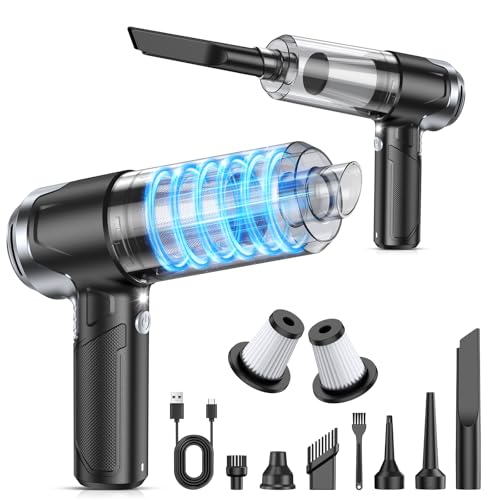
Shop vacuums designed for portable use offer car detailing capability that often exceeds typical consumer handheld vacuums. These industrial-influenced products prioritize raw power and durability over the compact form factors of household handhelds, delivering suction and debris-handling capacity that makes quick work of challenging car cleaning tasks. For serious detailers or car owners willing to trade some convenience for superior cleaning power, portable shop vacuums represent a compelling middle ground between consumer handhelds and full-size shop vacuum stations.

The trade-offs with portable shop vacuums involve size, weight, and handling characteristics that differ from consumer handheld products. These vacuums are larger, heavier, and require more storage space. They may be less convenient for casual quick cleaning but deliver meaningfully superior results for thorough detailing sessions. Understanding these trade-offs helps determine whether portable shop vacuum advantages align with your cleaning approach and vehicle maintenance priorities.

This guide examines portable shop vacuums for car detailing, exploring when their power and capacity advantages justify the size and convenience trade-offs.
Key Takeaways
- Superior suction power for challenging debris: Industrial-grade motors outperform consumer handhelds
- Wet-dry capability handles liquid spills: Versatility for various contamination types
- Larger capacity reduces emptying frequency: Work through complete detail without interruption
- Size and weight trade-offs exist: Less convenient than compact handhelds
- Best suited for serious detailing: May be overkill for casual maintenance cleaning
Table of Contents
What Makes Shop Vacuums Different
Understanding shop vacuum design helps evaluate their car detailing advantages.
Larger motors deliver more suction power than compact handheld motors can generate. Size enables power that portability-focused designs sacrifice.
Wet-dry capability handles both liquid spills and dry debris with single machine. Versatility addresses broader range of contamination types.
Larger debris capacity enables extended cleaning without interruption for emptying. Complete vehicle detailing without canister management.
Durable construction designed for workshop environments withstands heavy use better than consumer-grade products.
Hose and attachment systems often provide better reach and tool options than consumer handhelds.
Portable Shop Vacuum Characteristics
What distinguishes portable shop vacuums from stationary units.
Compact footprint relative to full-size shop vacuums while maintaining substantial power advantage over consumer products.
Carrying handles and cord management for transport between locations. Designed for mobility rather than permanent installation.
Capacity typically 2-6 gallons, balancing debris handling against portability. Smaller than full-size shop vacs but larger than handhelds.
Weight usually 8-15 pounds, heavier than handhelds but manageable for transport and use.
Power cord operation provides unlimited runtime at expense of cordless flexibility.
Suction Advantage for Detailing
How additional suction power benefits car detailing work.
Embedded debris that challenges consumer vacuums extracts more effectively with stronger suction. Ground-in dirt and deep carpet contamination responds to shop vacuum power.
Pet hair removal benefits from increased suction. Hair that consumer vacuums struggle with releases more readily under stronger pull.
Sand and heavy debris that fills consumer canister quickly handles without immediate overflow. Capacity and power combine for better heavy debris management.
Faster cleaning of typical debris due to increased efficiency. Same results in less time, or better results in same time.
Single-pass cleaning of debris that requires multiple passes with weaker equipment.
Wet-Dry Capability
Liquid handling capability adds versatility for car cleaning.
Spill cleanup becomes vacuum-manageable rather than requiring separate wet cleaning approach. Immediate response to liquid accidents.
Extraction cleaning support for shampooing and wet cleaning processes. Remove cleaning solution and moisture after wet treatments.
Flood damage response for vehicles that have taken on water. Remove standing water from interiors.
Appropriate filter changes required between wet and dry use on most models. Management of filter configuration for different contamination types.
Liquid capacity is typically rated separately from overall capacity. Understand wet capacity limits for your use.
Appropriate Use Cases
Situations where portable shop vacuums excel for car cleaning.
Thorough detailing sessions where cleaning quality is priority over convenience. Taking time to do comprehensive cleaning work.
Heavily contaminated vehicles requiring power to address challenging debris. Neglected interiors or post-renovation cleaning.
Pet owner vehicles with significant hair accumulation. Power advantage addresses stubborn pet hair effectively.
Garage or location with power access. Corded operation requires outlet availability.
Users willing to manage larger, heavier equipment for better results.
Less Appropriate Use Cases
Situations where portable shop vacuum advantages may not justify trade-offs.
Quick casual cleaning where convenience matters more than thoroughness. Grabbing handheld for fast touch-up is more practical.
Locations without power access. Cordless handhelds serve where outlets aren't available.
Storage-constrained situations. Larger footprint requires more storage space than compact handhelds.
Light debris loads where consumer vacuum capability is sufficient. Overkill for dust and light crumbs.
Users unwilling to handle heavier equipment. Portability is relative; these are heavier than handhelds.
Attachment Considerations
Tools and accessories affect shop vacuum utility for car cleaning.
Hose length and flexibility affects reach into vehicle interiors. Longer hose provides working distance; flexibility enables maneuvering.
Crevice attachment appropriate for car cleaning varies. Verify included crevice tool or purchase appropriate accessory.
Upholstery and brush attachments for fabric surfaces. Confirm availability of soft tools for interior surfaces.
Extension wands provide additional reach when needed. Useful for accessing rear seat areas from outside vehicle.
Car cleaning accessory kits available for some shop vacuum brands. Purpose-designed tools for vehicle applications.
Selection Factors
Considerations when choosing portable shop vacuum for car detailing.
Suction power specifications indicate relative capability. Higher ratings typically mean better cleaning performance.
Capacity affects how often emptying is needed. Larger capacity for more extensive cleaning without interruption.
Hose length and included attachments determine out-of-box usefulness. Short hoses or missing tools require additional purchases.
Noise level matters for residential use. Some shop vacuums are very loud; others are more reasonable.
Cord length affects practical usability. Short cords require extension cords; longer cords provide more flexibility.
Comparison with Alternatives
How portable shop vacuums compare to other car cleaning options.
Consumer handhelds offer greater convenience at expense of power. Choose based on whether power or convenience matters more.
Full-size shop vacuums offer more power and capacity but less portability. For garage-based cleaning, larger units may be appropriate.
Dedicated car vacuums may offer better form factors for vehicle interiors but typically less power than shop vacuums.
Professional detailing equipment offers maximum capability but at professional pricing. Shop vacuums provide professional-adjacent results at consumer prices.
Car wash vacuum stations offer similar power without ownership but at per-use cost.
Related Articles
Explore more car vacuum guides and reviews:
- Car Vacuum Cleaner Attachments Guide
- Best Cordless Car Vacuums Under $100
- Corded vs Cordless Car Vacuums: Which Type is Right for You?
- How to Vacuum Car Seats Properly
Frequently Asked Questions
Are shop vacuums good for car detailing?
Yes, particularly portable models. Superior suction and capacity handle challenging car cleaning tasks better than consumer handhelds. Trade-off is size and weight; shop vacuums are less convenient but more capable for thorough detailing work.
What size shop vacuum is best for cars?
2-4 gallon portable shop vacuums balance capacity against portability well for car cleaning. Larger units offer more capacity but less maneuverability. Smaller may require more frequent emptying for thorough detailing.
Can I use a shop vacuum on car upholstery?
Yes, with appropriate attachments. Avoid using rough tools on delicate fabric. Upholstery brush attachments designed for fabric surfaces are appropriate. Strong suction is actually helpful for extracting embedded debris from upholstery.
Is shop vacuum suction too strong for car interiors?
Generally no. Strong suction benefits cleaning; proper attachments prevent surface damage. Avoid using powerful suction directly on damaged or loose materials. Normal upholstery and carpet handle shop vacuum suction without issue.
Should I get wet-dry shop vacuum for car cleaning?
Wet-dry capability adds useful versatility. Handling spills, supporting extraction cleaning, and addressing moisture makes wet-dry more versatile than dry-only. Most portable shop vacuums include wet-dry capability as standard.
How do shop vacuums compare to car wash vacuums?
Similar power levels in many cases. Shop vacuum ownership eliminates per-use cost and provides availability whenever needed. Car wash vacuums require no storage or ownership investment. Choose based on usage frequency and preferences.
What attachments do I need for car detailing?
Crevice tool for tight spaces, upholstery brush for fabric surfaces, and flexible hose for maneuverability in interiors. Some shop vacuums include these; others require accessory purchase. Verify included tools before purchase.
Are portable shop vacuums loud?
Generally louder than consumer handhelds due to more powerful motors. Noise levels vary by model. Check specifications if noise concerns you. Using in garage or outdoor settings reduces noise impact on household.
How much does a good portable shop vacuum cost?
Quality portable shop vacuums for car detailing typically range from $50-$150. Lower-priced options may have less power or capacity. Higher-priced options may offer features not necessary for car cleaning specifically.
Can I leave my shop vacuum in my car?
Shop vacuums are too large for practical vehicle storage. These are garage or storage area equipment brought to vehicle for cleaning rather than stored in vehicle for immediate access.