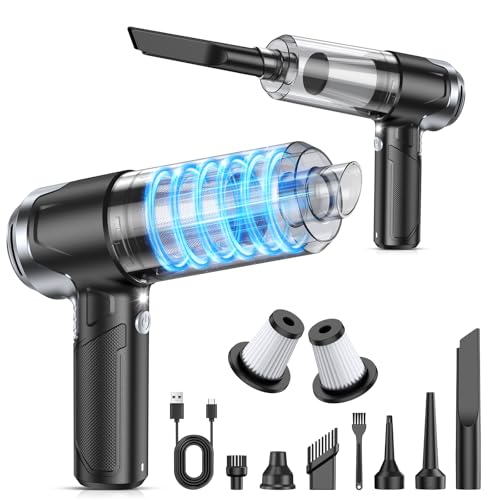
Milwaukee Tool has built its reputation on delivering professional-grade equipment that contractors trust for demanding jobsite applications. When that engineering expertise turns toward handheld vacuums, the result differs significantly from consumer-focused alternatives—tools designed for durability and performance that professional use demands rather than the minimum viable capability that satisfies casual users. The M12 vacuum brings this contractor-grade approach to a format well-suited for car cleaning, offering an intriguing option for users who value professional build quality.

The M12 system's compact lithium-ion platform provides substantial power in a relatively portable format, sitting between the truly compact batteries in dedicated handheld vacuums and the larger batteries in full-size cordless systems. This balance proves particularly relevant for car cleaning, where portability matters but adequate power determines practical effectiveness. The M12 vacuum leverages this platform to deliver capability that exceeds typical consumer handhelds without the bulk of larger professional systems.

This detailed examination explores how Milwaukee's professional tool philosophy translates to handheld vacuum performance, evaluating whether the contractor-grade construction and M12 platform capability justify investment for car cleaning applications. Understanding where this vacuum excels and where consumer alternatives might serve equally well helps determine whether Milwaukee's approach matches your priorities and expectations.
Key Takeaways
- Professional build quality: Contractor-grade construction significantly exceeds consumer handheld standards
- M12 platform integration: Uses batteries compatible with dozens of other Milwaukee tools
- Strong suction performance: 12V lithium platform provides more power than typical handhelds
- Premium price point: Higher investment than consumer alternatives, justified by quality and platform value
- Best value for existing M12 users: Bare tool pricing makes sense when you already own batteries
Table of Contents
- Understanding Milwaukee's Tool Philosophy
- M12 Vacuum Design and Construction
- Performance Characteristics
- Practical Car Cleaning Assessment
- M12 Platform Value Proposition
- Comparing to Consumer Alternatives
- Accessories and Attachments
- Maintenance and Long-Term Care
- Ideal Use Cases
- Related Articles
- Frequently Asked Questions
Understanding Milwaukee's Tool Philosophy
Milwaukee Tool occupies a specific market position that explains why their vacuum differs from consumer alternatives. Understanding this positioning helps evaluate whether Milwaukee's approach matches what you need and value.
The company focuses on professional trades—contractors, electricians, plumbers, and similar users who depend on tools daily and cannot tolerate failures that delay jobs and cost money. This focus drives engineering decisions prioritizing durability, reliability, and performance over consumer-market priorities like lowest possible price or sleek aesthetics.
Tools designed for professional use assume rough handling, temperature extremes, dust exposure, and years of regular use. Components, materials, and construction methods reflect these assumptions rather than the gentler treatment consumer products expect. This engineering approach produces tools that feel different in hand—more substantial, more solidly assembled, more confident in construction.
The M12 platform specifically targets applications where the larger M18 system's power exceeds needs while its size creates inconvenience. Compact tools like inspection cameras, heated gear, and yes, handheld vacuums benefit from the M12 battery's balance of capability and portability. The platform has matured into a comprehensive system with dozens of compatible tools.
Milwaukee's professional focus does mean premium pricing—contractor budgets and business deductions support higher prices than consumer markets typically accept. Evaluating M12 vacuum value requires comparing against quality and longevity rather than just initial price.
M12 Vacuum Design and Construction
The M12 vacuum's physical design reflects Milwaukee's professional tool approach in ways both visible and subtle. Examining construction details reveals how this vacuum differs from consumer alternatives.
The housing uses the heavy-duty plastic Milwaukee employs across their tool line—thicker, more rigid, and more impact-resistant than typical handheld vacuum shells. Drop tests and rough handling that might crack consumer plastics leave the Milwaukee housing intact. This durability matters for car cleaning where vacuums get tossed in trunks, knocked around during storage, and generally treated less carefully than household items.
Internal components receive similar attention. Motor mounts, switch mechanisms, and wiring all reflect professional tool standards rather than consumer-product minimums. These details don't appear in specifications but affect long-term reliability and feel during use.
The battery interface uses Milwaukee's standard M12 connection—the same solid, positive-locking mechanism across the entire platform. Batteries click into place confidently and stay secure during use. This interface has proven itself across millions of professional tools over years of demanding use.
Sealing and filtration protect the motor from debris infiltration more effectively than basic designs. Professional environments generate dust and debris that destroys inadequately protected motors; Milwaukee's experience with these conditions informs filtration design that extends motor life.
Ergonomics reflect professional use patterns—comfortable grip during extended use, balanced weight distribution, and control placement that works with gloved hands. These details seem minor but affect fatigue and comfort during thorough cleaning sessions.
Performance Characteristics
The M12 vacuum's performance stems from its platform's capability and Milwaukee's engineering optimization for vacuum applications. Understanding performance characteristics helps set appropriate expectations.
Suction power exceeds typical consumer handhelds, benefiting from the M12 battery platform's power delivery capability. The motor generates meaningful airflow that handles debris extraction effectively rather than merely adequate suction for surface pickup. This additional capability proves valuable for embedded debris in carpet and fabric that weaker vacuums struggle to extract.
The wide intake opening facilitates efficient debris collection, covering more surface area per pass than narrow-nozzle designs. This efficiency reduces cleaning time for large surfaces while maintaining effectiveness. The opening design also accommodates larger debris that narrow intakes would reject.
Runtime with standard M12 batteries typically provides 20-30 minutes of cleaning—adequate for thorough single-vehicle sessions. Higher-capacity M12 batteries extend runtime proportionally, though adding weight. The runtime proves sufficient for car cleaning purposes without the unlimited operation that corded alternatives provide.
Noise levels fall within typical ranges for handheld vacuums—not whisper-quiet, but not unusually loud either. The motor sound reflects the power being generated without aggressive noise that makes extended use unpleasant.
Suction consistency throughout battery discharge maintains effectiveness until power runs low rather than gradual weakening as charge depletes. This characteristic reflects Milwaukee's motor controller design across the M12 platform—tools perform consistently until batteries need recharging.
Practical Car Cleaning Assessment
How the M12 vacuum performs for car cleaning specifically—rather than general contractor applications—determines its value for automotive use.
The form factor suits car cleaning well. Compact enough to maneuver around seats and into tight spaces, powerful enough to extract debris effectively, and portable enough to move around the vehicle without cord limitations. The size exceeds pocket handheld vacuums but remains manageable for extended handheld use.
Reaching into footwells, under seats, and along door jambs works naturally with the M12's shape and intake position. The wide opening collects debris efficiently from flat surfaces while the crevice tool attachment addresses tight spaces where the main opening cannot fit.
Pet hair extraction benefits from the stronger-than-typical suction. Hair that lies on surfaces comes up readily; embedded hair in fabric requires more passes but eventually yields to persistent effort. The performance exceeds budget handhelds for hair extraction without matching specialized pet hair vacuums' capability.
Dust and fine debris collection works effectively, with filtration preventing fine particles from exhausting back into the cleaned space. The exhaust doesn't blow debris around as poorly-designed vacuums sometimes do.
Larger debris like gravel, leaves, and accumulated crumbs enters the wide intake readily. The container capacity accommodates reasonable debris volumes before emptying becomes necessary, though thorough cleaning of neglected vehicles may require mid-session emptying.
M12 Platform Value Proposition
The M12 vacuum's value calculation changes dramatically based on whether you already own M12 batteries and tools. Understanding this distinction helps evaluate whether Milwaukee makes sense for your situation.
For existing M12 users, the vacuum represents a bare-tool purchase—just the vacuum itself at $50-70 typical pricing. Your existing batteries power it immediately with no additional investment. The vacuum becomes an inexpensive addition to an established platform, providing professional-grade car cleaning capability for modest additional investment.
For new users, total investment includes battery and charger—pushing total cost to $100-150 or more depending on battery capacity and kit configuration. This price point competes with dedicated premium car vacuums that don't require platform investment but cannot leverage that platform for other tools.
The platform value extends beyond this single vacuum. M12 tools span categories from drills and drivers to specialty tools, heated gear, and lighting. If other M12 tools fit your needs, the platform investment spreads across multiple tools rather than concentrating in one vacuum purchase. This amortization can make Milwaukee cost-effective despite higher per-tool prices.
Battery sharing provides practical advantage—the same batteries moving between tools based on current need rather than each tool requiring dedicated batteries. For car cleaning specifically, using a battery from another tool means the vacuum is always ready without dedicated battery investment.
Comparing to Consumer Alternatives
Understanding how the M12 vacuum compares to consumer-market alternatives helps evaluate whether Milwaukee's approach provides value worth its premium.
Build quality comparison strongly favors Milwaukee. The construction difference is immediately apparent when handling both types—Milwaukee feels like a professional tool while consumer handhelds feel like consumer products. This difference translates to durability over years of use, though proving this requires long-term experience rather than initial evaluation.
Suction performance comparison depends on the specific alternatives considered. The M12 typically matches or exceeds consumer handhelds in the $50-100 range while falling short of premium dedicated vacuums like Dyson that cost significantly more. For car cleaning purposes, the M12's suction handles most situations effectively.
Feature comparison may favor consumer options in specific areas. LED lights, specialized pet tools, and elaborate attachment systems appear more commonly in consumer products optimized for feature appeal. Milwaukee's approach prioritizes core performance and durability over feature accumulation.
Price comparison favors consumer options when evaluated purely on vacuum cost. Milwaukee's value proposition requires valuing the build quality difference, platform integration, and long-term durability that specification sheets don't capture.
For users who treat vacuums as periodic replacements when they wear out, consumer options make financial sense—buy inexpensive, replace when needed. For users who want tools that last indefinitely with proper care, Milwaukee's professional construction provides that durability.
Accessories and Attachments
The M12 vacuum's accessory ecosystem affects versatility for different cleaning applications.
The included crevice tool addresses tight-space cleaning needs common in car interiors—between seats, along door jambs, in console crevices, and similar areas where the main intake cannot reach. The crevice tool's length provides adequate reach without excessive size that creates storage challenges.
Optional accessories expand capability for specific applications. Extension hoses increase reach for accessing distant areas; specialized nozzles address particular cleaning situations. Availability and pricing of accessories should factor into purchase decisions if specific accessories address your needs.
The accessory attachment system uses secure but convenient connection that keeps tools in place during use while allowing quick changes. Professional tool heritage shows in connection quality—accessories don't fall off unexpectedly or wobble loosely during operation.
Storage for accessories requires consideration since the vacuum itself lacks integrated accessory storage common on consumer products. Users typically store accessories separately or designate a container for the vacuum and its accessories together.
Maintenance and Long-Term Care
Proper maintenance maximizes the M12 vacuum's longevity and performance, leveraging the professional construction to achieve extended service life.
Filter maintenance follows standard best practices—regular cleaning when debris accumulates, complete drying before reinstallation, and replacement when filters degrade beyond effective cleaning. The filter design facilitates easy removal and cleaning, though replacement filters add modest ongoing cost.
Canister emptying should occur before overfilling to maintain suction and prevent debris backup. The canister removal and emptying process works simply, without complicated mechanisms that complicate maintenance.
Motor inspection and cleaning helps maintain performance, though the sealed design limits debris infiltration that would require frequent internal cleaning. Periodic inspection ensures no debris has bypassed filtration to accumulate where it shouldn't.
Battery care affects long-term platform value—proper charging habits, appropriate storage conditions, and avoiding complete discharge extend battery life. Milwaukee's battery management systems help protect against damage, but user practices still affect longevity.
Professional construction means maintenance produces proportional longevity gains—the vacuum can last many years with proper care rather than wearing out regardless of maintenance attention.
Ideal Use Cases
The M12 vacuum suits certain users and situations better than others. Identifying ideal use cases helps determine whether Milwaukee matches your needs.
Existing M12 platform users represent the clearest ideal case. Bare tool pricing and existing battery ownership create exceptional value proposition—professional-grade vacuum capability for minimal additional investment. If you already own M12 batteries, the vacuum becomes an obvious addition.
Users valuing long-term durability over lowest initial price find Milwaukee's professional construction worth the premium. The vacuum can provide years of reliable service that consumer alternatives may not match, potentially providing better lifetime value despite higher initial cost.
Users with multiple vehicles or frequent cleaning needs benefit from the capability and durability that handles regular use without premature wear. Light occasional use may not leverage the durability advantage that justifies Milwaukee's premium.
Users who appreciate professional tool quality—the solid feel, confident construction, and reliability—find satisfaction in Milwaukee products beyond pure functionality. This appreciation provides value that purely functional evaluation doesn't capture.
Related Articles
Explore more car vacuum guides and reviews:
- Car Vacuum Cleaner Attachments Guide
- Best Cordless Car Vacuums Under $100
- Corded vs Cordless Car Vacuums: Which Type is Right for You?
- How to Vacuum Car Seats Properly
Frequently Asked Questions
Is the Milwaukee M12 vacuum worth the premium over consumer options?
For existing M12 platform users, the bare-tool pricing makes it clearly worthwhile—professional quality for modest investment using batteries you already own. For new users requiring full kit purchase, the value depends on whether you value Milwaukee's construction quality and potential platform expansion enough to justify the premium over consumer alternatives.
How does M12 suction compare to dedicated car vacuums?
The M12 provides stronger suction than most consumer handhelds in the $50-100 range, handling typical car cleaning effectively. It falls short of premium dedicated vacuums like Dyson but costs less and offers platform integration those products lack. For most car cleaning situations, M12 suction proves adequate without matching maximum-suction alternatives.
Can the M12 vacuum handle wet spills?
No—the M12 handheld vacuum is designed for dry debris only. Using it on liquids risks motor damage and creates safety hazards. Milwaukee offers separate wet/dry vacuum options for applications requiring liquid pickup capability.
How long does the battery last during car cleaning?
Standard M12 batteries typically provide 20-30 minutes of runtime—adequate for thorough single-vehicle cleaning. Higher-capacity batteries extend runtime proportionally. The runtime suffices for most car cleaning sessions, though cleaning multiple vehicles may require battery swaps or recharging.
Is the M12 vacuum too bulky for car cleaning?
The M12 vacuum is larger than pocket-sized handhelds but remains manageable for car cleaning use. The size allows adequate power and container capacity while staying portable enough for maneuvering around vehicle interiors. Most users find the size appropriate for automotive applications.
What accessories should I buy with the M12 vacuum?
The included crevice tool handles most accessory needs for car cleaning. Extension hoses help reach distant areas in larger vehicles. Beyond these basics, accessory needs depend on specific cleaning situations you encounter. Start with included accessories and add others if specific needs arise.
How does the M12 vacuum compare to Milwaukee's M18 options?
The M18 platform offers more powerful vacuum options but in larger formats better suited to workshop use than handheld car cleaning. The M12's compact size and adequate power make it better suited for automotive applications where portability matters alongside capability.
Will Milwaukee quality actually last longer than consumer vacuums?
Professional tool construction is designed for demanding daily use that exceeds what car cleaning involves. Users report M12 tools providing years of reliable service with proper care. While proving longevity requires time, the construction quality visible and tactile in the product supports durability expectations.
Is the M12 vacuum good for pet hair?
The M12 handles pet hair better than many consumer handhelds due to stronger suction. Surface hair comes up readily; embedded hair requires more effort but eventually yields. The vacuum lacks specialized pet hair features that dedicated pet vacuums offer, but performs adequately for typical pet hair situations.
Should I buy the vacuum as a kit or bare tool?
If you own M12 batteries already, buy the bare tool and save the kit premium. If you need batteries, evaluate whether starter kits provide better value than separate battery purchase, and consider whether other M12 tools might interest you—platform investment affects whether kit pricing makes sense.