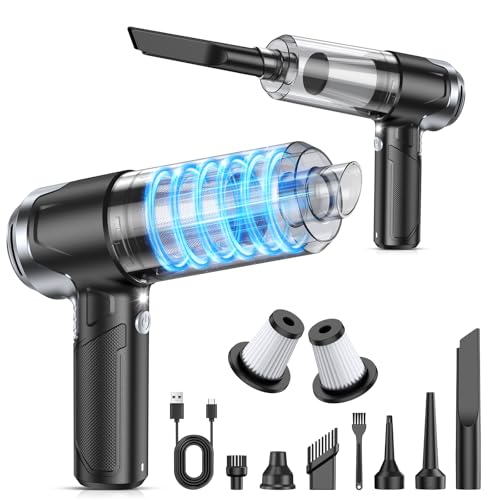
The Dyson V8 represents a fascinating crossroads in the car cleaning world—a premium home vacuum that many owners have discovered works remarkably well for automotive detailing. At a price point significantly higher than dedicated car vacuums, the V8 raises an important question: does investing in premium vacuum technology translate to meaningfully better results when cleaning your vehicle's interior? Understanding how this versatile cordless vacuum performs in automotive applications helps buyers make informed decisions about whether the premium investment makes sense for their specific needs.

User reviews and real-world experiences reveal a nuanced picture that depends heavily on individual circumstances. For households that already use or plan to purchase a Dyson V8 for home cleaning, the car cleaning capability becomes an essentially free bonus that many owners find genuinely valuable. However, for those considering the V8 primarily as a car cleaning solution, the economics become more challenging to justify when dedicated car vacuums cost a fraction of the price. This comprehensive analysis examines the V8's actual car cleaning performance, compares it honestly to purpose-built alternatives, and helps you determine whether this premium tool deserves a place in your vehicle cleaning routine.

What makes the Dyson V8 particularly interesting for car cleaning is its combination of powerful digital motor technology, versatile attachments, and cordless convenience. The vacuum's fade-free suction maintains consistent power throughout the cleaning session—a characteristic that proves especially valuable when tackling embedded pet hair, ground-in dirt, and debris wedged in carpet fibers. These capabilities have made the V8 a popular choice among car enthusiasts who prioritize thorough results over budget considerations.
Key Takeaways
- Best for: Buyers who already own or need a Dyson V8 for home use and want multi-purpose capability
- Suction performance: Genuinely superior to budget car vacuums, particularly for pet hair and embedded debris
- Car-specific design: Not optimized for automotive use, but attachments work adequately for most tasks
- Value proposition: Poor value if purchased solely for car cleaning; excellent value as a multi-purpose tool
- Price reality: Costs 10-15x more than dedicated budget car vacuums
- Runtime consideration: 25-40 minutes depending on power mode, sufficient for 1-2 vehicles
Table of Contents
- Understanding the Premium Vacuum Question
- Suction Power and Cleaning Performance
- Battery Life and Runtime Considerations
- Attachment Selection for Car Cleaning
- Comparison with Other Dyson Models
- Comparison with Dedicated Car Vacuums
- Practical Car Cleaning Tips with V8
- Maintenance Requirements
- Who Should Consider the Dyson V8
- Who Should Consider Alternatives
- Making the Right Choice for Your Situation
- Why Premium Performance Matters for Some Drivers
- Related Articles
- Frequently Asked Questions
Understanding the Premium Vacuum Question
Before evaluating the V8's car cleaning capability, the fundamental question must be addressed: does buying a premium vacuum for car cleaning actually make sense? This question has no universal answer—it depends entirely on your existing equipment, cleaning habits, and how you define value in your tools.
The Dyson V8 typically costs approximately $350-450 depending on configuration, retailer, and ongoing sales. A quality dedicated car vacuum, by comparison, costs $25-40 for corded models and $40-80 for cordless options with comparable features. The price difference ranges from 5x to 15x depending on what you're comparing. This substantial gap demands honest evaluation of whether the premium delivers proportional benefits.
From a purely car-cleaning perspective, the V8 represents a difficult value proposition when purchased specifically for automotive use. No car vacuum—regardless of quality, brand reputation, or performance capabilities—justifies a $400 investment when adequate alternatives exist at 10% of the cost. The math simply doesn't support that premium for vehicle cleaning alone, even accounting for superior build quality and longer lifespan.
The calculation changes completely when viewed through a different lens. For households that need or want a Dyson V8 for home cleaning anyway, using it for car cleaning adds zero incremental cost. In this context, the car cleaning capability transforms from an expensive indulgence into a genuine bonus feature. The multi-purpose approach reduces the total number of vacuums needed while ensuring premium performance across all applications.
This review evaluates the V8 from both perspectives: how effectively it cleans cars in absolute terms, and whether that car-cleaning capability makes the overall investment more valuable for different types of buyers.
Suction Power and Cleaning Performance
The Dyson V8's digital motor generates suction power that measurably exceeds what most dedicated car vacuums produce. This isn't marketing hyperbole—it reflects fundamental engineering differences between premium home vacuums and budget car-specific models. The V8's motor spins at up to 110,000 RPM, generating consistent airflow that pulls debris from carpet fibers more effectively than lower-powered alternatives.
In standard mode, the V8 produces suction sufficient for routine car cleaning tasks: surface debris, loose dirt, crumbs, and light dust accumulation. This mode preserves battery life for longer cleaning sessions while still outperforming many budget car vacuums at their maximum settings. Users report that standard mode handles approximately 80% of typical car cleaning scenarios without issue.
MAX mode unleashes the V8's full power capability, drawing significantly more air through the system to extract embedded debris. This setting proves particularly valuable for pet hair removal, deep carpet cleaning, and situations where extended neglect has allowed dirt to compact into fabric fibers. The trade-off is reduced runtime—MAX mode drains the battery roughly twice as fast as standard operation.
Real-world cleaning effectiveness depends heavily on the specific task and debris type:
Surface debris and crumbs: The V8 excels at quick cleanup of visible mess on seats and floor mats. Standard mode handles these tasks efficiently while preserving battery for longer sessions.
Pet hair extraction: This represents perhaps the V8's most significant advantage over budget alternatives. The motorized brush head agitates carpet and fabric fibers while strong suction pulls freed hair into the dustbin. Users with shedding pets consistently report superior results compared to dedicated car vacuums.
Embedded dirt and sand: MAX mode proves valuable here, pulling particles that have worked their way deep into carpet fibers. The combination of brush agitation and strong suction addresses contamination that budget vacuums often leave behind.
Tight spaces and crevices: Performance depends largely on attachment selection. The crevice tool reaches most automotive gaps effectively, though some tight spots in certain vehicle models may challenge even the longest attachments.
Battery Life and Runtime Considerations
Cordless operation represents one of the V8's primary advantages for car cleaning—no extension cords, no power outlet proximity concerns, no cord management hassles. However, this convenience comes with the inherent limitation of battery-dependent runtime that all cordless vacuums share.
The V8's runtime varies significantly based on power mode and attachment selection. In standard mode without motorized attachments, the vacuum runs approximately 40 minutes. Using motorized brush heads reduces this to roughly 25-30 minutes. MAX mode cuts runtime dramatically, typically providing 7-8 minutes of cleaning time before requiring a recharge.
For car cleaning specifically, these runtime limitations prove manageable for most users. A typical single-vehicle cleaning session takes 10-20 minutes depending on the vehicle size, mess level, and thoroughness desired. The V8's standard mode runtime easily accommodates this, with capacity to spare for home cleaning tasks afterward.
Multi-vehicle households face more challenging considerations. Cleaning two vehicles in sequence works well within the V8's standard mode runtime, but three or more vehicles may require strategic planning or mid-session recharging. Heavily soiled vehicles that demand extensive MAX mode use compound this challenge further.
The V8's charging time of approximately 5 hours represents a meaningful constraint for users who need extended cleaning capability. This isn't problematic for typical weekly cleaning routines, but it does limit the vacuum's usefulness for marathon cleaning sessions or commercial applications.
Attachment Selection for Car Cleaning
The Dyson V8 ships with various attachments depending on the specific model configuration purchased. Understanding which attachments work best for car cleaning helps users maximize the vacuum's effectiveness while avoiding frustration with poorly-suited tools.
Mini motorized head: This attachment proves most valuable for car upholstery and carpeted surfaces. The compact brush bar agitates fibers to release embedded debris and pet hair while the motorized action helps the vacuum maintain consistent performance. Users with pets consistently identify this attachment as essential for automotive use.
Crevice tool: The narrow profile reaches between seats, along console edges, and into door pocket corners where debris accumulates but standard attachments cannot access. Most vehicles have numerous tight spaces where this tool proves invaluable for thorough cleaning.
Combination tool: The integrated brush bristles help with dusty surfaces and delicate materials, switching between brush and direct suction modes as needed. Useful for dashboard cleaning and fabric surfaces where gentle treatment matters.
Soft dusting brush: Appropriate for delicate interior surfaces where scratching represents a concern. Works well on instrument panels, touchscreens, and leather surfaces that could show marks from harder attachments.
Dyson also offers a car cleaning kit sold separately that includes specialized attachments designed specifically for automotive applications. This kit provides additional tools optimized for vehicle-specific cleaning scenarios, though many users find the included attachments sufficient for their needs.
Comparison with Other Dyson Models
For buyers committed to the Dyson ecosystem for car cleaning, the V8 competes with other models in the lineup. Understanding the differences helps determine whether stepping up or down makes sense for specific situations.
Dyson V7: The V8's predecessor offers slightly less power and shorter runtime at a lower price point. For car cleaning specifically, the V7 provides adequate capability for most users while reducing the investment required. The performance difference matters more for home cleaning than automotive applications.
Dyson V10: Offers improved suction power, longer runtime, and a redesigned dustbin that's easier to empty. The upgrades benefit home cleaning more than car cleaning specifically—the V8's capability already exceeds what most automotive cleaning scenarios demand.
Dyson V11: Adds an LCD screen displaying runtime remaining and automatic suction adjustment based on floor type. These features provide minimal benefit for car cleaning where manual mode selection works fine and runtime demands are modest.
Dyson V15: The flagship model includes laser dust detection and advanced filtration. While impressive technology, these features target home cleaning applications and provide little practical advantage for automotive use.
For buyers specifically considering a Dyson for car cleaning with occasional home use, the V8 represents a reasonable balance of capability and cost. More expensive models provide diminishing returns for automotive applications specifically, making the additional investment hard to justify unless home cleaning needs demand the upgrades.
Comparison with Dedicated Car Vacuums
Honest comparison between the Dyson V8 and purpose-built car vacuums reveals a more complex picture than simple performance metrics suggest. Both categories have legitimate strengths that serve different user priorities.
Suction power: The V8 generates meaningfully stronger suction than most budget car vacuums. This difference becomes noticeable with embedded debris and pet hair, where the Dyson's superior airflow produces visibly better results. For surface cleaning of loose debris, the performance gap narrows considerably.
Size and maneuverability: Dedicated car vacuums often feature more compact designs optimized for automotive spaces. The V8's versatility as a home vacuum makes it somewhat larger and heavier than purpose-built car cleaning tools. In very tight spaces, smaller dedicated vacuums may navigate more easily.
Cord vs. cordless: The V8's cordless operation eliminates extension cord hassles and allows cleaning anywhere—a significant convenience advantage. Corded car vacuums provide unlimited runtime but require outlet access and cord management.
Price and value: Dedicated car vacuums cost a fraction of the V8's price. Budget options under $40 handle routine cleaning adequately for many users. The V8's premium can only be justified when its multi-purpose capability provides value beyond car cleaning alone.
Build quality and longevity: Dyson's engineering and materials quality exceeds most budget alternatives. The V8 should provide years of reliable service with proper maintenance, while cheaper car vacuums may need replacement more frequently. However, at the price differential involved, multiple budget vacuum replacements may still cost less than a single Dyson.
Practical Car Cleaning Tips with V8
Users who own or decide to purchase a V8 for car cleaning can maximize effectiveness through proven techniques and approaches. These practical tips help get the best results from the vacuum's capabilities.
Use standard mode for most tasks: Standard mode provides sufficient power for routine cleaning while preserving battery for longer sessions. Reserve MAX mode for stubborn debris, pet hair removal, and deep cleaning scenarios where extra power makes a measurable difference.
Start with the mini motorized head: For upholstery and carpeted surfaces, the motorized brush attachment outperforms passive tools. The agitation action loosens debris and pet hair that static suction alone might miss. This attachment alone often justifies the V8 for pet owners.
Work systematically from top to bottom: Start with dashboard, door panels, and upper surfaces, then move to seats, and finish with floor areas. This approach prevents debris from falling onto already-cleaned surfaces and ensures nothing gets missed.
Empty the dustbin before car cleaning: Car cleaning often generates more debris than quick home cleaning sessions. Starting with an empty bin prevents capacity issues mid-clean and ensures consistent suction throughout the process.
Address pet hair with proper technique: Work the motorized head slowly across upholstery, allowing the brush bar time to extract hair from fabric fibers. Quick passes miss embedded hair that slower, deliberate strokes effectively remove.
Use appropriate attachments for tight spaces: The crevice tool reaches areas the main cleaning head cannot access. Take time to clean between seats, around console components, and in door pockets where debris accumulates over time.
Consider seasonal deep cleaning: Monthly routine cleaning maintains interior appearance, but quarterly deep cleaning sessions using MAX mode and all attachments address accumulation that regular maintenance misses.
Maintenance Requirements
Proper maintenance keeps the V8 performing at its best for car cleaning and extends the vacuum's useful lifespan. These tasks require minimal time but deliver meaningful benefits.
Dustbin emptying: Empty after each use, or more frequently during heavy cleaning sessions. The V8's cyclonic design maintains suction even as the bin fills, but regular emptying ensures optimal airflow and prevents odors from developing.
Filter cleaning: The washable filter should be cleaned monthly under normal use, or more frequently if used heavily for car cleaning where fine dust and particles accumulate. Allow filters to dry completely before reinstalling—typically 24 hours.
Brush bar maintenance: Check the motorized brush attachment regularly for wrapped hair, string, and debris that can impede rotation. Cut away accumulated material with scissors to maintain brush effectiveness and prevent motor strain.
Overall cleaning: Wipe down the vacuum body periodically to remove dust and maintain appearance. Check air pathways for blockages if suction seems reduced despite clean filters and empty dustbin.
Battery care: The V8's lithium-ion battery performs best with regular use. Avoid leaving it fully discharged for extended periods. Battery replacement may eventually be needed—Dyson offers replacement batteries that users can install themselves.
Who Should Consider the Dyson V8
The V8 makes sense for car cleaning in specific circumstances that align with its strengths and justify its premium:
Existing Dyson owners: If you already own a V8 for home cleaning, using it for cars costs nothing extra. The multi-purpose capability becomes a genuine bonus rather than an expensive addition.
Multi-purpose buyers: Households needing a quality cordless vacuum for both home and car cleaning can reduce total equipment costs by purchasing one premium tool rather than separate specialized devices.
Pet owners with shedding dogs or cats: The V8's motorized brush and strong suction extract pet hair from car upholstery more effectively than most budget alternatives. For those regularly battling pet hair in vehicles, the performance difference may justify the investment.
Quality-focused buyers: Some users simply prefer premium tools with proven durability and performance. For buyers who value build quality and are willing to pay for it, the V8 delivers on both counts.
Who Should Consider Alternatives
The V8 doesn't make sense for everyone, and honest evaluation reveals situations where other options better serve user needs:
Budget-conscious buyers: If cost matters significantly, dedicated car vacuums provide adequate performance at a fraction of the price. The V8's premium cannot be justified when simpler alternatives meet practical needs.
Car-only purchasers: Buying a V8 specifically for car cleaning represents poor value regardless of its performance. Dedicated car vacuums cost 90% less and handle most scenarios adequately.
Users with existing home vacuums: If you already own a quality home vacuum and don't need to replace it, adding a V8 provides limited incremental value. A dedicated car vacuum makes more sense in this situation.
Commercial or high-volume users: The V8's battery runtime limits its usefulness for cleaning multiple vehicles in quick succession. Professional detailers and commercial operations need corded solutions or multiple battery systems.
Making the Right Choice for Your Situation
The Dyson V8 delivers genuinely superior car cleaning performance compared to budget alternatives. The suction is stronger, pet hair extraction is dramatically better, and build quality suggests long-term reliability that cheaper options rarely match. These aren't marketing claims—they reflect real engineering differences that produce measurable results.
However, superior performance doesn't automatically equal superior value. At $400 versus $30-40 for dedicated car vacuums, the V8 carries a premium that pure car cleaning performance cannot justify. The math only works when multi-purpose capability factors into the equation—when the vacuum serves both home and car cleaning needs effectively.
For buyers specifically seeking car cleaning solutions, dedicated car vacuums provide better value even accounting for performance differences. The money saved can address other vehicle maintenance needs or simply remain in your pocket. Premium performance matters less than adequate performance at appropriate cost.
For buyers seeking a versatile cordless vacuum that excels at both home and car cleaning, the V8 represents a thoughtful choice. The premium buys genuine capability improvements, multi-purpose utility, and build quality designed for years of reliable service. Understanding which category you fall into helps make the right decision for your specific circumstances.
Why Premium Performance Matters for Some Drivers
Understanding why some car owners willingly pay the Dyson premium reveals priorities that budget-focused analysis sometimes misses. These buyers aren't making irrational decisions—they're valuing different factors.
Time represents the hidden cost in car cleaning. A vacuum that extracts pet hair in one pass saves time compared to a budget option requiring multiple attempts. For busy households, the efficiency gains compound over months and years of use.
Frustration tolerance varies among users. Some people accept adequate results from budget tools; others find the limitations genuinely annoying. For the latter group, premium performance provides satisfaction that cheaper alternatives cannot match.
Vehicle pride motivates thorough cleaning for many owners. Enthusiasts who take pride in their vehicles' appearance want tools that deliver professional-quality results. The V8's capabilities serve this audience well, even if the investment seems excessive to others.
Simplification appeals to users who prefer fewer, better tools over multiple specialized devices. Owning one premium vacuum that handles all cleaning scenarios reduces complexity compared to maintaining separate home and car vacuums.
Related Articles
Explore more car vacuum guides and reviews:
- Car Vacuum Cleaner Attachments Guide
- Premium vs Budget Car Vacuums: Is Expensive Worth It?
- Corded vs Cordless Car Vacuums: Which Type is Right for You?
- How to Vacuum Car Seats Properly
Frequently Asked Questions
Is the Dyson V8 worth buying just for car cleaning?
No, purchasing a V8 specifically for car cleaning represents poor value regardless of its superior performance. At approximately $400 compared to $30-40 for capable dedicated car vacuums, the premium cannot be justified for automotive use alone. The V8 makes sense for car cleaning only when you already own one or plan to use it for home cleaning as well, making the car capability an essentially free bonus.
How does V8 suction compare to dedicated car vacuums?
The V8's suction measurably exceeds what most budget car vacuums produce. This difference becomes most apparent with embedded debris and pet hair extraction, where the Dyson's powerful motor and engineered airflow pull material that cheaper vacuums leave behind. For surface cleaning of loose debris, the performance gap narrows considerably as most vacuums handle this task adequately.
Do I need the car cleaning kit accessory?
Most users find the standard included attachments—particularly the mini motorized head and crevice tool—sufficient for car cleaning needs. The separate car cleaning kit provides specialized tools optimized for automotive applications, but represents an optional enhancement rather than a necessity. Consider it if you use the V8 for cars frequently and want optimized tools for vehicle-specific scenarios.
How does the V8 compare to newer Dyson models for car cleaning?
Newer models like the V10, V11, and V15 offer improvements that primarily benefit home cleaning applications—longer runtime, automatic power adjustment, and advanced features. For car cleaning specifically, the V8's capability already exceeds what most automotive scenarios demand. The additional investment in newer models provides diminishing returns for vehicle use.
Can the V8 runtime handle cleaning multiple cars?
In standard mode, the V8 provides sufficient runtime for cleaning one to two vehicles with reasonable cleaning needs during a single session. Three or more vehicles, or heavily soiled conditions requiring extensive MAX mode use, may require mid-session recharging. The 5-hour charge time limits quick turnaround for extended cleaning sessions.
How often should I clean the V8's filter when using it for car cleaning?
Monthly filter cleaning suffices for typical use, but car cleaning often involves fine dust and particles that can accumulate faster than home cleaning. If using the V8 primarily for cars, consider cleaning the filter every two to three weeks. Always allow the filter to dry completely (24 hours minimum) before reinstalling to prevent motor damage and maintain optimal performance.
Does the V8 work well for cleaning car floor mats?
The V8 excels at floor mat cleaning, particularly with the mini motorized head attachment. The brush agitation combined with strong suction extracts embedded dirt and debris effectively from both carpet and rubber mats. For heavily soiled mats, remove them from the vehicle and clean outside to prevent redistributing dirt within the car interior.
Is the V8 too heavy for comfortable car cleaning?
At approximately 5.6 pounds fully assembled, the V8 is heavier than most dedicated car vacuums but lighter than traditional full-size home vacuums. Most users find the weight manageable for typical car cleaning sessions of 10-20 minutes. The ergonomic design and trigger-activated operation help reduce fatigue during extended use.
Can I use the V8 to clean car air vents?
Yes, the soft dusting brush attachment works well for air vent cleaning. The gentle bristles dislodge dust without damaging vent slats while suction removes debris before it can redistribute. This approach works better than using the crevice tool alone, which may push dust deeper into vent systems rather than extracting it.
How does the V8 handle sand and fine beach debris?
Sand removal is one area where the V8's strong suction provides clear advantages over budget alternatives. MAX mode pulls sand from carpet fibers more effectively than weaker vacuums, though multiple passes may still be needed for heavily contaminated vehicles. The key is working slowly to allow the vacuum time to extract embedded particles rather than just surface material.