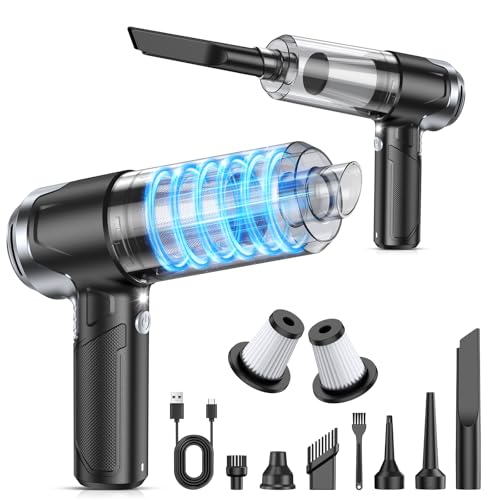
Dyson handheld vacuums command significant price premiums over competitors, raising a legitimate question about whether their performance justifies the investment for car cleaning applications. The brand's reputation for engineering innovation and powerful suction creates expectations that premium pricing reflects proportionally superior performance. Whether that's actually true for car cleaning depends on understanding what Dyson vacuums do well, where alternatives may offer comparable performance at lower cost, and what features actually matter for vehicle interior cleaning.

Evaluating Dyson for car cleaning requires separating brand perception from actual utility. Strong brand reputation doesn't automatically translate to best value for specific applications. Dyson vacuums excel in certain areas while potentially offering less differentiation in others. Understanding where Dyson's engineering advantages matter for car cleaning enables informed purchase decisions based on actual needs rather than general brand impression.

This guide examines Dyson handheld vacuums for car cleaning applications, analyzing whether premium pricing delivers proportional value for vehicle interior maintenance.
Key Takeaways
- Dyson offers genuine engineering advantages: Cyclonic technology and motor engineering deliver strong performance
- Premium pricing reflects overall quality: Build quality, design, and performance justify higher cost for some users
- Car cleaning may not utilize all advantages: Some Dyson strengths matter more for home use than vehicle cleaning
- Alternatives exist at lower price points: Competitor products offer good car cleaning performance for less
- Value depends on intended use breadth: Users who vacuum cars only may find premium unnecessary
Table of Contents
Dyson Technology Overview
Understanding what Dyson offers helps evaluate its relevance for car cleaning.
Cyclonic separation technology maintains suction as debris accumulates. Unlike filter-based systems that lose suction as filters clog, cyclonic systems maintain more consistent performance.
Digital motors in higher-end models deliver high power relative to size. Compact motors producing strong suction enable capable handheld form factors.
Substantial engineering investment goes into airflow optimization. Dyson dedicates significant resources to efficiency improvements that affect real-world performance.
Build quality and materials exceed many competitors. Premium pricing includes quality construction that typically lasts longer than budget alternatives.
Comprehensive attachment systems enable versatile cleaning. Purpose-designed attachments for various surfaces come included or available.
Performance for Car Cleaning
How Dyson advantages translate to vehicle cleaning applications.
Strong suction handles typical car debris effectively. Crumbs, dirt, sand, and pet hair that challenge weaker vacuums extract reliably with Dyson handhelds.
Maintained suction through debris collection matters for extended car cleaning sessions. Consistent performance through the cleaning task is genuine advantage.
Quality attachments address different car surfaces effectively. Purpose-designed crevice and upholstery tools reach car-specific cleaning challenges.
Build quality suggests longer useful lifespan than budget alternatives. Reliability over years affects total ownership cost calculation.
Runtime on battery varies by model but typically provides adequate time for thorough car cleaning.
Where Dyson Advantages Matter Less
Not all Dyson strengths translate equally to car cleaning value.
Car cleaning typically generates moderate debris volume. The sustained performance advantages that matter for house cleaning may be less critical for smaller car cleaning tasks.
Vehicle cleaning is often brief compared to whole-home vacuuming. Features designed for extended cleaning sessions deliver less benefit for shorter car cleaning.
Some Dyson models are larger than ideal for car cleaning. Home-optimized form factors may be less maneuverable in vehicle interiors.
Advanced features like digital displays and app connectivity add cost without particular car cleaning benefit.
Premium pricing may fund capabilities you won't use if car cleaning is primary application.
Model Considerations for Car Use
Dyson offers various models with different car cleaning suitability.
Compact handheld models suit car cleaning form factor requirements. Smaller size enables maneuvering in vehicle interiors and easier storage.
Stick vacuum models may be less ideal for car cleaning despite strong suction. Longer form factors can be unwieldy in confined car spaces.
Runtime varies significantly between models. Ensure chosen model provides adequate runtime for your car cleaning needs.
Attachment availability affects car cleaning utility. Confirm appropriate crevice and upholstery tools are included or available.
Price varies substantially across Dyson lineup. Lower-priced Dyson models may offer best car cleaning value within the brand.
Competitor Comparison
Context from alternative options informs value assessment.
Several competitors offer strong car cleaning performance at significantly lower prices. The performance gap between Dyson and quality alternatives may be smaller than the price gap.
Some brands specifically target car cleaning applications. Purpose-designed car vacuums may offer better form factors for vehicle use than multipurpose handhelds.
Budget cordless vacuums have improved substantially. Lower-priced options that once were clearly inferior now offer respectable performance.
Used or refurbished Dyson models offer potential value. Previous-generation Dyson at reduced pricing may provide good value.
Warranty and support vary between brands. Dyson typically offers good support; some competitors match this while others don't.
Total Cost of Ownership
Purchase price isn't the complete cost picture.
Dyson build quality typically supports longer useful life. Higher purchase price amortized over more years may equal or beat cheaper alternatives replaced more frequently.
Battery replacement costs and availability affect long-term ownership. Dyson battery replacement is available but adds to ownership cost.
Filter maintenance costs vary. Some Dyson models have washable filters; replacement filter costs affect ongoing expenses.
Durability under regular car cleaning use matters. Premium construction may withstand the environments and uses car cleaning involves better than budget alternatives.
Resale value of quality equipment partially offsets purchase price if you upgrade or change products.
Who Should Consider Dyson
Dyson makes sense for some car cleaning users more than others.
Users who will also vacuum home interiors get more value from Dyson investment. Multipurpose use justifies premium pricing better than single-application purchase.
Those who want single high-quality tool rather than multiple cheaper ones may prefer Dyson approach.
Users who value build quality and are frustrated by cheaper equipment failures may find Dyson's durability worth premium.
Pet owners dealing with stubborn hair may appreciate Dyson's strong suction capabilities.
Those willing to invest for potential long-term durability rather than minimizing upfront cost suit Dyson's value proposition.
Who Should Consider Alternatives
Premium pricing doesn't make sense for all car cleaning users.
Users who only need car cleaning may find dedicated car vacuums offer better value at lower cost.
Budget-conscious users can find adequate car cleaning performance for significantly less investment.
Those who clean cars infrequently may not justify premium equipment for occasional use.
Users satisfied with "good enough" rather than requiring premium performance can achieve adequate results for less.
Those who lose or damage equipment frequently may prefer lower-cost options that are cheaper to replace.
Making the Decision
Framework for evaluating whether Dyson makes sense for your situation.
Define your complete use case. If car-only, value proposition differs from multipurpose home and car use.
Assess your quality versus cost priorities. Some users genuinely prefer premium quality regardless of cost; others prioritize value.
Consider how long you expect to use the product. Longer expected use horizon favors durable equipment.
Evaluate alternatives actually available at your budget points. Understanding specific alternatives helps compare rather than considering Dyson in isolation.
Trust your own research over brand reputation. Dyson makes good products, but good products exist at other price points too.
Related Articles
Explore more car vacuum guides and reviews:
- Car Vacuum Cleaner Attachments Guide
- Premium vs Budget Car Vacuums: Is Expensive Worth It?
- Corded vs Cordless Car Vacuums: Which Type is Right for You?
- How to Vacuum Car Seats Properly
Frequently Asked Questions
Are Dyson vacuums good for car cleaning?
Yes, Dyson handheld models clean cars effectively with strong suction and good attachments. Whether they're the best value for car cleaning specifically depends on whether you'll also use them for home cleaning and your price sensitivity.
Which Dyson is best for car cleaning?
Compact handheld models suit car cleaning better than larger stick vacuums. Models with good runtime and included crevice and upholstery attachments are most useful. Consider size and maneuverability in vehicle interiors alongside suction power.
Is Dyson worth the extra money?
For users who will use it frequently and for multiple applications, quality and durability may justify premium pricing. For infrequent car-only use, alternatives may offer better value. Worth is personal and depends on your priorities and use patterns.
How long does Dyson handheld battery last?
Runtime varies by model and power setting, typically ranging from 6-40 minutes depending on model and suction level. Most models provide adequate time for thorough car cleaning on a single charge.
Can cheaper vacuums clean cars as well as Dyson?
Quality competitors can achieve good car cleaning results for less cost. The performance gap for car cleaning specifically may be smaller than for whole-home use. Adequate car cleaning doesn't require premium equipment.
How long do Dyson handheld vacuums last?
With proper care, quality Dyson vacuums often last 5-10 years. Battery life may decrease before the vacuum itself fails; battery replacement extends useful life. Build quality supports longevity compared to budget alternatives.
Do I need the most expensive Dyson for car cleaning?
No. Mid-range or even entry-level Dyson handhelds provide sufficient power for car cleaning. Premium models add features often more relevant to home cleaning than vehicle interiors. Match model to actual use needs.
Is Dyson better than car-specific vacuums?
Different strengths: Dyson offers premium build and power; car-specific vacuums offer form factors designed for vehicle interiors, sometimes with 12V power options. Best depends on your priorities and whether you need multipurpose capability.
Should I buy Dyson or save money on a cheaper brand?
Consider how you'll use it, how much, and for how long. Frequent multipurpose use over years favors Dyson's durability. Infrequent or car-only use may not justify premium. Cheaper brands can clean cars adequately.
What's the best alternative to Dyson for car cleaning?
Several brands offer good handheld vacuums at lower prices. Dedicated car vacuums designed specifically for vehicle cleaning offer purpose-built form factors. Research current models at your budget for best alternative options.