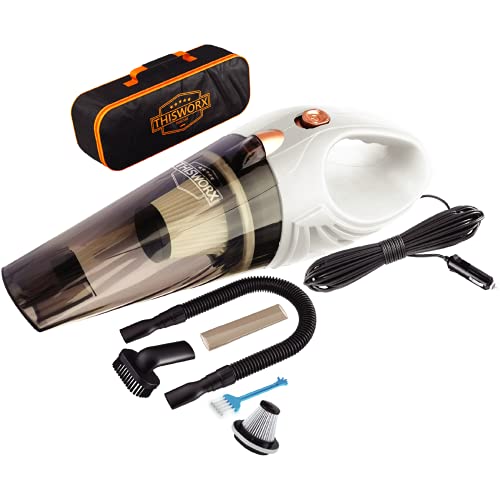
Cordless car vacuums have transformed vehicle cleaning from a tethered chore dependent on outlet proximity into a flexible activity possible anywhere, anytime. The freedom from cords enables cleaning at gas stations, in driveways, at parking lots—wherever your vehicle happens to be when cleaning need or opportunity arises. This convenience has driven explosive market growth, producing countless cordless options that range from barely functional to genuinely impressive in capability.
The proliferation of cordless vacuum options creates both opportunity and confusion. More choices mean better chances of finding something that matches your specific needs, but also more work sorting through options to identify that match. Marketing claims often emphasize impressive-sounding specifications that don't translate directly to practical cleaning effectiveness, making informed selection challenging without guidance on what actually matters.

This complete guide explains how to choose a cordless car vacuum that genuinely suits your needs—examining the factors that determine real-world satisfaction, explaining what specifications actually mean for practical use, and helping you avoid common selection mistakes that lead to disappointing purchases. The goal is empowering informed decisions rather than pushing particular products.
Key Takeaways
- Runtime requirements vary: Match battery capacity to your vehicle size and cleaning thoroughness
- Suction specs mislead: Practical cleaning effectiveness matters more than advertised numbers
- Weight affects comfort: Lighter vacuums enable longer cleaning without fatigue
- Attachment quality matters: The right accessories determine what cleaning situations you can address
- Battery type affects longevity: Lithium-ion provides best performance and lifespan
Table of Contents
Why Cordless Makes Sense for Car Cleaning
Understanding the advantages cordless design provides helps evaluate whether cordless is right for you and what trade-offs the format involves.
The primary cordless advantage involves freedom from cord management and outlet dependency. Corded vacuums require routing cords through vehicle doorways, avoiding tangles as you move around the interior, and positioning near available outlets. Cordless vacuums eliminate all these concerns—you simply grab the vacuum and clean wherever, whenever.
Portability enables cleaning opportunities that corded alternatives cannot address. Cleaning while waiting during oil changes, quick touchups at gas stations, debris removal after beach visits or messy activities—these spontaneous cleaning moments become possible when vacuum use doesn't require outlet access and cord management.
Storage convenience improves with cordless design. Compact cordless vacuums fit in glove compartments, center consoles, or trunk corners for always-available cleaning capability. Keeping a vacuum permanently in the vehicle ensures cleaning capability exists whenever needed without requiring equipment transport from home.
The trade-offs involve finite runtime that eventually requires recharging, somewhat lower maximum suction than the most powerful corded alternatives, and battery degradation over years that eventually affects performance. These compromises prove acceptable for most car cleaning situations, though users with exceptional power requirements or marathon cleaning sessions may find corded options better suited.
Runtime: The Critical Specification
For cordless vacuums, runtime determines whether a single charge handles your cleaning needs or whether frustrating mid-session depletion interrupts effectiveness. Understanding runtime requirements helps select appropriate battery capacity.
Manufacturer runtime claims require interpretation. Advertised figures typically represent optimal conditions—lowest power settings, new batteries, minimal cleaning load—that real-world use doesn't replicate. Practical runtime during active cleaning commonly falls 20-40% below advertised figures, and this gap widens as batteries age.
Estimating your runtime needs requires considering vehicle size, cleaning thoroughness, and working efficiency. Compact cars might clean in 10-15 minutes; mid-size vehicles might need 15-25 minutes; large SUVs, trucks, or vans might require 30+ minutes for thorough cleaning. Adding margin above minimum estimates prevents frustrating battery depletion before cleaning completes.
Multiple power settings affect runtime calculations. Many cordless vacuums offer high-power modes for demanding cleaning and eco modes for lighter tasks. High-power modes deplete batteries faster but clean more effectively; eco modes extend runtime with reduced suction. Vacuums with power options provide flexibility to optimize for situation—maximum power when needed, extended runtime when adequate suction suffices.
Battery capacity directly correlates with runtime. Higher-capacity batteries run longer but add weight and cost. Evaluating whether additional capacity provides value requires matching battery capability to actual runtime requirements rather than assuming more is always better.
Suction Power Demystified
Suction power specifications create confusion because different manufacturers use different measurements without standardized testing, making direct comparison unreliable. Understanding what specifications mean helps interpret claims appropriately.
Common suction specifications include watts (power consumption), volts (electrical potential), air watts (power delivered to airflow), kPa or kilopascals (suction pressure), and CFM (airflow volume). Each measures different aspects of vacuum operation, and none directly indicates cleaning effectiveness across all situations. A vacuum optimized for high kPa might clean differently than one optimized for high CFM despite similar-seeming specifications.
Practical cleaning effectiveness depends on how well suction, airflow, and nozzle design work together for the debris and surfaces you encounter. A vacuum with moderate specifications but excellent engineering may outclean a higher-spec vacuum with poor design. Specifications provide starting points for comparison, not definitive rankings.
For typical car cleaning, most current cordless vacuums provide adequate suction. Dust, crumbs, and loose debris yield to moderate suction readily. Where suction differences become meaningful involves challenging situations—embedded pet hair, ground-in dirt, heavy contamination—where marginal vacuums struggle while more powerful options succeed.
The most reliable suction assessment comes from user reviews describing cleaning situations similar to yours. Real-world reports of how vacuums handle specific debris types and surface conditions predict your experience more accurately than specification comparisons.
Weight and Ergonomics
Cordless vacuum weight and ergonomic design significantly affect cleaning comfort during extended use. These factors deserve more consideration than many buyers give them.
Heavier vacuums cause fatigue during extended cleaning sessions. Battery weight contributes significantly to total weight—larger batteries providing longer runtime also increase weight that your hand and arm must support throughout cleaning. This trade-off between runtime and weight has no perfect solution, only balance points that suit different priorities.
Weight distribution affects comfort as much as total weight. Well-balanced vacuums feel lighter than poorly balanced alternatives of similar weight. Batteries positioned near the grip create better balance than batteries at the unit's end, where they create leverage that strains grip and wrist.
Grip design determines how comfortably you hold the vacuum during use. Ergonomic grips that match natural hand position reduce fatigue compared to grips requiring awkward holding positions. Rubberized or textured surfaces provide secure grip without requiring tight holding force.
Trigger placement and effort affect comfort during extended use. Easily accessible triggers requiring light pressure reduce hand fatigue compared to stiff triggers in awkward positions. Lock-on features that maintain operation without constant trigger holding further reduce fatigue during longer sessions.
Where possible, physically handling vacuums before purchase provides ergonomic assessment that specifications cannot capture. Retail environments enabling hands-on evaluation help predict which vacuums will feel comfortable during actual use.
Battery Technology Matters
Battery technology significantly affects both immediate performance and long-term satisfaction with cordless vacuums. Understanding battery types helps select options that serve well over years of ownership.
Lithium-ion batteries represent the current standard for quality cordless vacuums. These batteries provide consistent power output through discharge rather than gradual weakening, maintain charge well during storage, and typically last 3-5+ years before significant degradation. Higher upfront cost compared to older battery types pays dividends through better performance and longer life.
Older nickel-based batteries (NiCd, NiMH) still appear in budget products but offer inferior performance. These batteries lose capacity through the "memory effect" if not fully discharged before recharging, provide declining power as they discharge, and typically don't last as long as lithium-ion alternatives. Avoiding these older technologies—still found in lowest-price options—prevents frustration from outdated battery limitations.
Battery replaceability affects long-term value. Vacuums with removable batteries allow capacity restoration through battery replacement when original batteries degrade, extending vacuum life beyond battery lifespan. Vacuums with sealed batteries require entire vacuum replacement when batteries no longer provide adequate runtime—a significant cost compared to battery-only replacement.
Tool-platform compatibility creates value for users with existing cordless tool investments. Vacuums using batteries compatible with other tools (DeWalt, Milwaukee, Makita, etc.) leverage existing battery investments, potentially providing vacuum capability for just the bare tool cost rather than full battery-inclusive pricing.
Essential Attachment Evaluation
Attachments translate vacuum suction into practical capability for different cleaning situations. Evaluating attachment quality and selection helps ensure the vacuum addresses your actual cleaning needs.
Crevice tools represent the most essential car cleaning attachment. These narrow extensions reach into tight spaces—between seats, along door jambs, in console crevices—where main vacuum bodies cannot fit. A vacuum without an effective crevice tool cannot thoroughly clean vehicle interiors regardless of other capabilities. Evaluate crevice tool length, narrowness, and construction quality.
Brush attachments improve fabric and upholstery cleaning. Bristles dislodge debris from fabric surfaces for vacuum pickup, improving results on seats, carpets, and floor mats. Motorized brush attachments provide even more effective agitation but add complexity, weight, and cost. Assess whether brush attachments match the surfaces you need to clean.
Extension components increase reach for accessing distant areas. Longer reach proves valuable in larger vehicles or when cleaning from outside the vehicle. Flexible hoses versus rigid extensions affect maneuverability in different situations.
Attachment connection quality determines whether accessories stay attached during use or fall off frustratingly. Secure connections that release intentionally but not accidentally improve cleaning experience. Loose-fitting attachments that wobble or detach create unnecessary frustration.
Compare what's included versus what requires separate purchase. Some vacuums include comprehensive attachment sets; others provide minimal basics with useful accessories sold separately at additional cost. Understanding total accessory investment helps accurate comparison.
Filtration and Maintenance
Filter systems affect both cleaning effectiveness and ongoing maintenance requirements. Understanding filtration helps select options that balance performance with maintenance convenience.
Standard filters capture most debris adequately for car cleaning purposes. These filters require periodic cleaning or replacement but don't add significant cost or complexity. For typical car cleaning without particular allergy concerns, standard filtration suffices.
HEPA filtration captures smaller particles that standard filters miss, potentially relevant for users with dust sensitivities or allergies. True HEPA filtration adds cost but provides cleaner exhaust air that matters in enclosed vehicle spaces. Evaluate whether your needs justify HEPA premium.
Washable filters reduce ongoing costs by enabling cleaning and reuse rather than requiring replacement. Filter washing convenience varies—some designs rinse easily while others require more effort. Completely drying filters before reinstallation prevents mold growth and motor damage.
Filter access design affects maintenance convenience. Easy-access filters encourage regular maintenance that keeps vacuums performing well. Difficult filter access discourages maintenance, leading to suction degradation from dirty filters that users don't address promptly.
Dust container design and capacity affect how often emptying interrupts cleaning and how messy the process becomes. Larger containers require less frequent emptying; well-designed release mechanisms minimize debris spillage during emptying. One-button release or similar convenience features improve maintenance experience.
Build Quality Assessment
Construction quality determines how long vacuums provide useful service and how well they maintain performance over time. Evaluating build quality helps predict long-term satisfaction.
Housing material quality affects durability. Quality plastics resist impact, maintain appearance, and don't crack or degrade under normal use. Thin, flexible plastics may indicate construction compromises that affect durability. Feeling housing solidity when handling vacuums provides quality indication.
Motor quality affects performance longevity. Quality motors maintain suction capability over years of use; budget motors may degrade faster. Motor quality rarely appears in specifications but significantly affects long-term satisfaction. Brand reputation and user reviews provide indirect quality signals.
Assembly quality shows in fit and finish. Tight seams, solid component connections, and confident operation indicate quality assembly. Loose components, visible gaps, or wobbly operation suggest construction compromises. Physical inspection when possible reveals assembly quality that specifications don't capture.
Brand reputation provides imperfect but useful quality signals. Established manufacturers with quality track records typically produce more reliable products than unknown brands, though exceptions exist. User reviews mentioning durability after extended use provide more specific guidance than brand reputation alone.
Budget Considerations
Cordless car vacuum prices span from under $30 to over $500, with capabilities generally correlating to investment level. Understanding what different price points provide helps allocate spending effectively.
Budget options under $50 provide basic cordless capability with significant compromises in runtime, suction, and build quality. These vacuums suit light cleaning needs, users who view vacuums as periodic replacements, or those testing cordless cleaning before larger investment.
Mid-range options from $50-150 deliver the capability improvements that justify moving beyond budget—better batteries, stronger suction, longer runtime, more durable construction. This range represents the sweet spot where most users find appropriate value.
Premium options above $150 provide maximum capability in suction, runtime, build quality, and features. These vacuums suit users with demanding cleaning requirements, those who value quality and expect long-term ownership, or users whose time value makes quick effective cleaning worth premium investment.
Calculating cost-per-year based on expected service life provides better value assessment than initial price alone. A $150 vacuum lasting 5 years costs $30/year; a $50 vacuum lasting 1 year costs $50/year despite lower initial investment. Quality investment often provides better long-term value.
Related Articles
Explore more car vacuum guides and reviews:
- Best Cordless Car Vacuums Under $100
- Corded vs Cordless Car Vacuums: Which Type is Right for You?
- ThisWorx Car Vacuum Review
- How to Vacuum Car Seats Properly
Frequently Asked Questions
How much runtime do I need for car cleaning?
Typical needs range from 15-30 minutes depending on vehicle size and cleaning thoroughness. Compact cars might need 10-15 minutes; large SUVs or trucks might need 30+ minutes. Adding margin above minimum estimates prevents frustrating mid-session depletion. Remember advertised runtime exceeds practical runtime by 20-40%.
Are expensive cordless vacuums worth the premium?
For users with demanding needs, yes—premium options provide capability and durability that budget alternatives cannot match. For users with modest needs and realistic expectations, mid-range options provide excellent value. Match investment to actual requirements rather than assuming expensive means better value.
How long do cordless vacuum batteries last?
Quality lithium-ion batteries typically maintain useful capacity for 3-5+ years with proper care. Capacity gradually diminishes with age and charge cycles regardless of care. Vacuums with replaceable batteries allow capacity restoration; sealed batteries require vacuum replacement.
What's the most important attachment for car cleaning?
The crevice tool is essential—car interiors contain countless tight spaces where main vacuum bodies cannot reach. A quality crevice tool determines how thoroughly you can clean between seats, along door areas, and in console spaces. Evaluate crevice tool quality carefully.
Should I choose a vacuum brand or tool brand?
Both produce capable cordless vacuums. Vacuum brands optimize specifically for cleaning; tool brands bring professional construction with battery platform benefits. Existing tool platform owners benefit from bare-tool pricing using owned batteries. Choice depends on whether cleaning optimization or platform integration matters more.
How do I know if a cordless vacuum has good suction?
Specifications don't reliably indicate real-world suction effectiveness. Look for user reviews describing how vacuums handle debris types similar to yours. Terms like "powerful suction" in marketing mean little; specific experience reports from users with similar needs provide better guidance.
Is HEPA filtration necessary for car vacuums?
For most users, standard filtration suffices. HEPA matters for users with dust sensitivities or allergies who want cleaner exhaust air. The premium for true HEPA filtration only provides value if you'll benefit from enhanced filtration.
What weight is comfortable for extended cleaning?
Vacuums under 3 pounds remain comfortable for most users during extended cleaning. Heavier vacuums cause fatigue during thorough sessions. Weight tolerance varies individually—heavier-than-comfortable vacuums may still be acceptable for brief cleaning but become problematic for detailed work.
Can I leave my cordless vacuum on the charger?
Modern lithium-ion systems tolerate being left on chargers without damage. However, some manufacturers recommend removing fully charged batteries to optimize long-term battery health. Check specific product recommendations—practices vary by manufacturer and charging system design.
How often should I clean or replace filters?
Clean washable filters when visible debris accumulates—typically every few cleaning sessions for regular use. Replace disposable filters according to manufacturer recommendations or when cleaning no longer restores performance. Dirty filters reduce suction; regular maintenance maintains effectiveness.