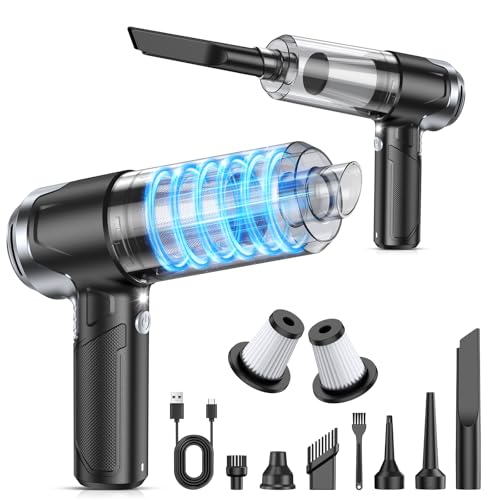
The budget car vacuum market is crowded with options that look remarkably similar in photos and specifications. The MEG Car Vacuum sits at the lower end of this price range, promising basic cleaning capability at minimal cost. After three months of testing, I can report whether the MEG delivers acceptable value for extremely budget-conscious buyers or if the low price reflects correspondingly low quality.

The answer involves understanding what reasonable expectations look like at this price point.

Key Takeaways
- Best for: Extremely budget-conscious buyers with modest cleaning needs
- Price reality: Among the cheapest options available in the category
- Performance level: Basic capability sufficient for light maintenance
- Build quality: Reflects the budget pricing - functional but not durable
- Value assessment: Gets the job done for buyers with appropriate expectations
Table of Contents
- Understanding Ultra-Budget Expectations
- Suction Performance Reality
- Build Quality Assessment
- Cord and Power Considerations
- Attachment Set Evaluation
- Filter System
- Real-World Testing Scenarios
- MEG vs Budget Alternatives
- The Budget Value Calculation
- Who Should Buy This Vacuum
- Who Should Look Elsewhere
- Durability Concerns
- Improving the MEG Experience
- The Honest Budget Recommendation
- Final Verdict
- Frequently Asked Questions
Understanding Ultra-Budget Expectations
Before evaluating the MEG specifically, it is important to calibrate expectations for vacuums at this price point:
Ultra-budget vacuums typically compromise on:
- Motor power and suction strength
- Build material quality and durability
- Attachment quality and fit
- Filter effectiveness and longevity
- Cord quality and length
These compromises are not defects - they are the inevitable result of manufacturing constraints at minimal price points. The question is whether the compromises remain tolerable for intended use or cross into unacceptable territory.
The MEG must be evaluated against what is reasonable to expect for its price, not against what more expensive vacuums deliver.
For comparison with mid-range options, check out our guide on HOTOR Corded Car Vacuum Review: Reliable Daily Driver.
Suction Performance Reality
The MEG provides basic suction that handles light debris adequately:
Fine dust and light dirt: Picks up well on first pass. Everyday dust accumulation on dashboards, seats, and floors comes up without issues. This is the MEG's primary competency.
Food crumbs: Standard crumbs and dry snack debris clean up reasonably. Light food mess is within capability.
Sand and grit: This is where limitations emerge. Light sand picks up with effort; heavier accumulation requires multiple passes and patience. Beach aftermath is challenging.
Pet hair: Surface hair is manageable with persistence. Embedded hair is beyond practical capability - the suction simply is not strong enough for extraction.
Heavier debris: Larger particles may not pick up at all. The MEG lacks the power for challenging debris.
For buyers who primarily need light dust and crumb removal with occasional deeper cleaning, the MEG's suction is adequate. For buyers who regularly face challenging debris, the limitation will frustrate.
Build Quality Assessment
The MEG's construction reflects its budget positioning:
Body material: Thin plastic construction that flexes noticeably under pressure. Not concerning for normal use but clearly less robust than mid-range alternatives.
Seams and fit: Visible seam lines with adequate but not precise alignment. Components fit together functionally without premium feel.
Weight: Very light at approximately 1.8 pounds. This makes handling easy but contributes to the insubstantial feel.
Motor housing: Basic construction that contains vibration adequately during operation.
Power button: Functional switch without premium tactile feedback. Works reliably enough.
After three months, the MEG shows more wear than higher-quality vacuums would. The plastic has minor scratches, and the overall feel is slightly less tight than initially. Nothing has broken, but the construction clearly has limited longevity compared to better-built alternatives.
You might also find helpful: ThisWorx Car Vacuum Review: Is It Worth the Hype?.
Cord and Power Considerations
The MEG includes a power cord of approximately 14 feet:
Cord length: Slightly shorter than many competitors. Most vehicles are accessible, but larger vehicles may require repositioning.
Cord quality: Thin insulation that is functional but feels less durable than better options. No issues during testing, but long-term durability is uncertain.
Plug design: Basic 12V plug that fits standard sockets. No LED indicator or premium features.
Power delivery: Consistent despite the basic cord. No fluctuations or concerning behavior.
The cord situation is adequate without being impressive. It does the job for normal vehicles and cleaning sessions.
Attachment Set Evaluation
The MEG includes basic attachments:
Crevice tool: Standard narrow design for reaching tight spaces. Length is adequate for most applications. Plastic quality is thin but functional.
Brush attachment: Basic bristle design for surface cleaning. Bristles are softer than premium alternatives, which may actually be gentler on delicate surfaces.
Attachment fit: This is a weakness. Attachments connect with noticeable looseness - not falling off during use but wobbling enough to be annoying. The fit quality reflects manufacturing tolerances at this price point.
The attachments work but lack the secure, precise fit of better vacuums. Users who find attachment wobble frustrating should consider spending more for better options.
Filter System
The MEG uses a basic washable filter:
Filter design: Simple foam/mesh combination that captures debris adequately. Not HEPA-rated or particularly fine in filtration.
Maintenance: Washable with water. Dry completely before reinstalling.
Longevity: The filter quality suggests more frequent replacement than premium alternatives. Budget for replacements every 2-4 months with regular use.
Exhaust quality: Fine dust may escape through filtration. Allergy-sensitive users should consider better-filtered alternatives.
The filter does its basic job of preventing debris from reaching the motor. Fine particle capture is limited.
Real-World Testing Scenarios
Quick weekly maintenance: The MEG's sweet spot. Light dust and crumb removal works well enough for basic upkeep.
Post-road trip cleanup: Struggles with accumulated debris if the trip involved significant mess. Light cleanup works; heavy cleaning tests the limits.
Kid mess management: Basic crumbs handle adequately. Larger spills and heavy debris are challenging.
Work vehicle cleaning: Fine dust from office environments cleans well. Construction or outdoor work debris is difficult.
Deep cleaning attempt: Not recommended. The MEG lacks the power for thorough detailing. Use it for maintenance between proper cleanings.
Related reading: VacLife Handheld Car Vacuum Review: Best Under $30?.
MEG vs Budget Alternatives
| Feature | MEG | Standard Budget ($25-30) | Mid-Range ($35-45) |
|---|---|---|---|
| Price | ~$18-22 | ~$25-30 | ~$35-45 |
| Suction Power | Basic | Good | Very Good |
| Build Quality | Basic | Good | Very Good |
| Attachment Fit | Loose | Good | Secure |
| Expected Lifespan | 1-2 years | 2-3 years | 3-4 years |
| Cleaning Capability | Light | Moderate | Thorough |
The MEG saves $7-15 compared to standard budget options. Whether that savings matters more than the capability and quality differences depends on individual priorities and cleaning needs.
The Budget Value Calculation
Evaluating the MEG requires honest assessment of what that price difference buys:
Arguments for the MEG:
- Genuine cost savings for tight budgets
- Adequate for light maintenance needs
- Works as intended for basic cleaning
- Low-risk purchase if it does not meet needs
Arguments against the MEG:
- Limited capability may frustrate during actual use
- Shorter lifespan means earlier replacement
- Attachment wobble affects user experience
- May cost more long-term if replacement is needed sooner
For buyers who genuinely need to minimize initial outlay and have light cleaning needs, the MEG makes sense. For buyers who can stretch slightly for a $25-30 option, the capability improvement is likely worth the extra cost.
Who Should Buy This Vacuum
- Extremely budget-constrained buyers: When every dollar matters and basic capability is acceptable
- Light cleaners: Those who only deal with dust and light crumbs
- Backup vacuum users: As a secondary option kept in the vehicle while a better vacuum stays in the garage
- Temporary needs: Short-term vehicle ownership or rental car cleaning
- Gift buyers: Inexpensive option for vehicles that rarely get cleaned anyway
Who Should Look Elsewhere
- Regular cleaners: Frequent use demands better durability
- Heavy debris situations: Sand, pet hair, or significant mess needs more power
- Quality-focused buyers: Those bothered by loose fits and basic construction
- Long-term planners: Better vacuums cost less over time through longer lifespan
- Detail-oriented users: Thorough cleaning requires more capability
See also: AIRSEE Car Vacuum Review: Portable Power Analysis.
Durability Concerns
The primary concern with ultra-budget vacuums is longevity:
Motor life: Basic motors may fail sooner than quality alternatives. The MEG motor performed adequately during testing but construction suggests limited long-term durability.
Plastic degradation: Thin plastic shows wear faster. Expect visible aging within a year of regular use.
Connection points: The cord and attachment connections are potential failure points. Basic construction increases risk of issues.
Filter degradation: Basic filters lose effectiveness faster, requiring more frequent replacement.
A realistic expectation is 1-2 years of regular use before replacement becomes necessary. Heavy use may shorten this timeline.
Improving the MEG Experience
If you purchase the MEG, these practices help maximize value:
Use for appropriate tasks: Stick to light dust and crumbs rather than challenging debris.
Clean filter frequently: The basic filter clogs faster. Regular cleaning maintains what suction exists.
Avoid overheating: Keep cleaning sessions moderate. The basic motor may overheat with extended use.
Handle attachments carefully: The loose fit means attachments can disconnect. Pay attention during use.
Store properly: Keep protected from temperature extremes and physical damage to extend lifespan.
The Honest Budget Recommendation
When someone asks whether they should buy the MEG, my honest response depends on their situation:
If budget is truly constrained: The MEG works for light cleaning. It is better than no vacuum, and the low price makes it accessible.
If an extra $10 is possible: Spending slightly more on a $28-32 vacuum provides meaningfully better capability and durability that typically justifies the additional cost.
The MEG exists for buyers who genuinely cannot or choose not to spend more. It serves that purpose adequately. But it is not the best value in absolute terms - slightly better vacuums offer significantly better performance for modest additional investment.
Final Verdict
The MEG Car Vacuum delivers exactly what its price suggests: basic cleaning capability with basic construction quality. It handles light dust and crumbs adequately and fails on challenging debris. It works but will not last as long as better alternatives.
For extremely budget-constrained buyers with light cleaning needs, the MEG provides acceptable value. For buyers who can stretch their budget slightly, the improvement from spending $25-30 instead typically justifies the additional cost.
The MEG is not a bad vacuum for its price - it is exactly what that price can deliver. Match your expectations to the product category, and you will either find acceptable value or realize your needs require a different solution.
Frequently Asked Questions
Is the MEG worth buying or should I spend more?
For light dust and crumb removal with tight budget constraints, the MEG works adequately. For regular cleaning or challenging debris, spending $25-35 on a better option provides meaningfully better value.
How long will the MEG last?
Expect 1-2 years of regular use based on construction quality. Heavy use or challenging debris may shorten lifespan. Plan for eventual replacement.
Can the MEG handle pet hair?
Surface hair is manageable with effort. Embedded pet hair is beyond practical capability - the suction is not strong enough for extraction.
Why do the attachments wobble?
Manufacturing tolerances at ultra-budget price points result in less precise fits. The attachments work but lack the secure connection of better vacuums.
Is buying cheap and replacing better than buying expensive once?
Generally no. A $30 vacuum lasting 3 years costs $10/year. Two $20 vacuums lasting 1.5 years each cost $13/year. Plus, better vacuums clean better throughout their lifespan.